Free US Shipping on orders $100+
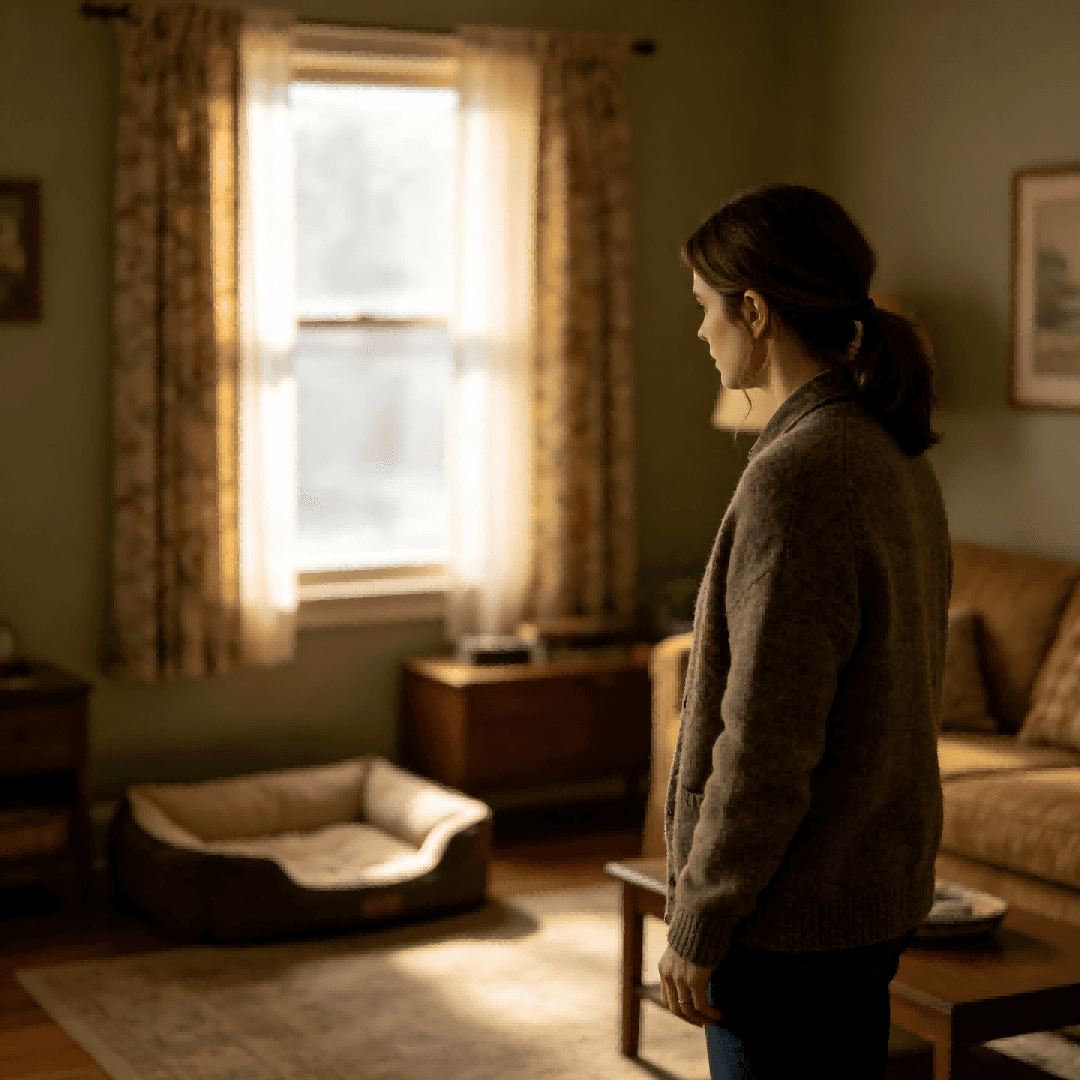
Grief has strange habits.
Sometimes it arrives all at once. Other times, it appears quietly in the middle of completely ordinary moments — when opening a door, sitting on the couch, or walking through the grocery store and instinctively reaching for their favorite treats.
After losing a pet, people often expect sadness. What they don't expect are the tiny automatic moments when the mind still believes their companion is nearby.
You glance toward the hallway expecting movement.
You avoid stepping near their old sleeping spot.
You hear a sound outside and immediately think, "That sounds like them."
These moments can feel surprising, emotional, and deeply human.
Because love builds patterns into us. And those patterns don't disappear overnight.
Pets become part of our internal map of home.
Not just physically, but emotionally. We learn their routines without realizing it. The sound of nails against the floor. The time they usually waited near the kitchen. The feeling of their weight beside us at night.
Over time, the brain stops treating these things as "events." They become expectations.
That's why, after loss, many people still find themselves looking for their pet automatically. The attachment remains active even when reality has changed.
Psychologists sometimes describe grief as the mind adjusting to absence. But emotionally, it often feels less clinical than that.
It feels like reaching for someone who still exists in your habits.
Some places become unexpectedly emotional after pet loss.
The corner near the window where they loved sunlight.
The spot near the door where they waited every afternoon.
The park bench where you always stopped together.
These places hold emotional residue. Not in a supernatural sense, but in the deeply human way memory attaches itself to physical environments.
This is why certain rooms suddenly feel empty.
Why routines become difficult.
Why even silence inside the house can feel different.
The environment hasn't changed much.
But emotionally, everything has.
Many grieving pet owners say the hardest moments aren't dramatic ones. They're the tiny unconscious habits that continue afterward.
Calling their name accidentally.
Saving scraps of food before remembering.
Opening the door more carefully so they "don't run out."
These actions happen because care becomes automatic after years of love.
And strangely, those habits can continue long after grief softens.
Not because someone is "stuck," but because meaningful bonds leave lasting imprints on daily behavior.
One reason pet loss feels so personal is because pets witness our ordinary lives more than almost anyone else.
They see the unfiltered version of us.
The tired mornings.
The anxious nights.
The quiet weekends no one else notices.
Their companionship becomes woven into routine itself.
So when they're gone, grief doesn't only appear during memorial moments. It appears while making coffee. Folding laundry. Locking the front door.
The absence enters everyday life in hundreds of tiny ways.
At some point after losing a pet, most people revisit old photos.
Sometimes it happens intentionally. Sometimes it's accidental — a memory notification, a forgotten album, an old video buried in the phone gallery.
And often, the emotional reaction is stronger than expected.
Photos freeze moments we didn't realize would become precious.
A blurry sleeping position.
A funny expression.
A simple ordinary afternoon that suddenly feels irreplaceable.
Over time, these images stop feeling like reminders of loss alone. They begin feeling like proof that love existed fully and beautifully.
There's a common fear after pet loss: "What if I never stop missing them?"
But missing them is not failure.
It's continuation.
Healing doesn't erase attachment. It changes the way attachment lives inside you.
Eventually, the pain becomes less sharp. The memories become easier to visit. And the small moments that once caused tears sometimes begin bringing comfort instead.
You realize you're not trying to "move on" from them.
You're learning how to move forward with their memory included.
Many people naturally keep something tangible after losing a pet.
A collar in a drawer.
A favorite toy.
A framed photo near the bed.
A memorial necklace worn quietly every day.
These objects matter because grief is emotional, but also physical. We miss touch, presence, closeness.
Having something visible or wearable can create a gentle sense of connection during difficult moments.
Not as a way to stay trapped in sadness, but as a way to honor a bond that still matters deeply.
The strange thing about pet loss is that our pets continue appearing in life long after they're gone.
In routines.
In habits.
In certain corners of the house.
In quiet thoughts we don't even realize we're having.
Love leaves traces everywhere.
And maybe healing isn't about removing those traces at all.
Maybe it's about learning to see them differently — not only as reminders of absence, but as evidence of a connection meaningful enough to shape us forever.
That's why small memorials can feel so comforting. A photo, a keepsake, or a quietly worn engraved necklace can become part of carrying that love forward gently.
At Rempaw, that quiet connection is at the heart of every memorial piece — creating something personal enough to keep memories close, even as life slowly moves ahead.

July 11, 2026
"I want people to know my dog existed." If you've lost a beloved dog and fear they'll be forgotten, you're not alone. Learn why sharing memories is a natural part of grief and meaningful ways to honor your dog's life.

July 10, 2026
If your cat seemed fine yesterday but passed away today, you're not alone. Learn why some illnesses progress silently, why guilt is so common, and gentle ways to begin healing after sudden pet loss.

July 6, 2026
Losing a dog after a routine procedure can leave you overwhelmed with guilt and unanswered questions. Learn why these feelings are common, how to cope with traumatic pet loss, and gentle ways to honor your dog's memory.