Free US Shipping on orders $100+
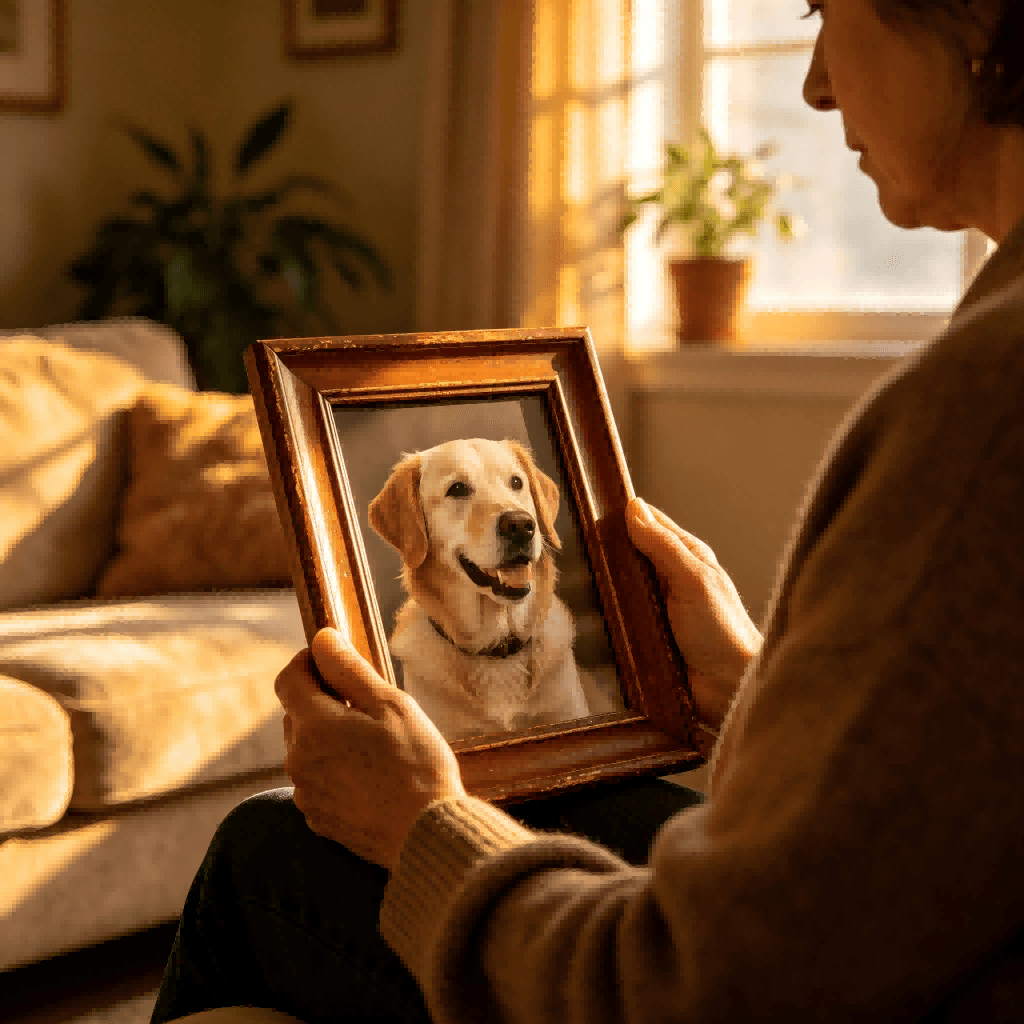
There's a particular kind of silence that enters a home after a pet is gone.
It's not just quiet—it's the absence of small, familiar sounds. The tapping of paws on the floor. The soft breathing beside your bed. The excited rush to the door when keys jingle. When a pet passes away, the world doesn't just feel different. It feels incomplete.
For many people, a pet is not "just an animal." They are morning routines, emotional anchors, silent companions through hard days. So when they leave, the grief can feel unexpectedly deep—sometimes deeper than what others understand.
And yet, grief is not something to fix. It's something to move through gently, at your own pace.
Most people don't anticipate how heavy pet loss can feel until they experience it themselves.
You might still reach for their leash on instinct. You might pause before pouring food into a bowl that no longer gets used. These small moments are often where grief hits the hardest—not in big dramatic waves, but in everyday repetition.
There's also a strange contradiction: life around you continues normally, while something deeply personal has stopped.
Friends may say "you gave them a good life," or "you can always get another pet," but those words rarely touch the real feeling underneath. Because what you miss isn't just their presence—it's their unique way of existing in your world.
One of the hardest truths about pet loss is that grief doesn't behave logically.
Some days feel okay. Other days, a smell, a sound, or even sunlight falling in a familiar corner can bring everything back.
People often expect themselves to "move on" quickly. But emotional attachment doesn't operate on deadlines. Love doesn't end just because life has changed.
Instead of trying to push grief away, many people find it softer to simply let it exist alongside daily life. Not as something to solve, but something to carry.
Healing after losing a pet doesn't mean forgetting. It usually begins with remembering in small, intentional ways.
Some people create a corner in their home—a photo, a favorite toy, maybe a collar placed gently on a shelf. Others write letters to their pet, speaking things they never got to say out loud.
And sometimes, healing is even quieter than that. It's just learning to sit with the memory without breaking apart.
What matters most is not the method, but the meaning behind it: "You were important. You still are."
Grief slowly changes shape over time. At first, memories feel sharp, almost painful. But later, they begin to soften. The sadness doesn't disappear, but it starts to share space with gratitude.
You remember how they waited for you. How they trusted you completely. How they made ordinary days feel a little less heavy.
Memory becomes less about loss and more about continuation. They are gone physically, but they remain part of your emotional story.
This is why many people choose to keep something tangible—a photo, a keepsake, or something small they can hold when they miss them deeply.
There are moments when grief returns unexpectedly. A quiet evening. A familiar walk. A dream that feels too real.
In those moments, having something physical can help ground the emotion. A small object you can touch, something that carries meaning beyond words.
For some, this becomes a necklace engraved with their pet's name or image. Not as decoration, but as connection. A quiet reminder that love didn't disappear—it simply changed form.
These objects don't replace the pet. Nothing can. But they can hold space for memory when emotions feel too heavy to carry alone.
One of the most difficult parts of pet loss is accepting that there is no final closure in the way we often expect.
There is no last conversation. No explanation. Just absence.
And yet, over time, many people realize something unexpected: the bond doesn't actually end. It transforms.
Instead of presence in physical form, there is presence in memory, instinct, emotion. You still feel them in small ways—when you smile at something they used to do, or when you find yourself telling stories about them without realizing it.
Love, in that sense, doesn't vanish. It simply changes its language.
Losing a pet is never just an event. It is an emotional shift that stays with you long after the moment itself has passed.
But within that loss, there is also something enduring: the life you shared, the comfort they gave, and the way they shaped your days.
Healing doesn't mean letting go of them. It means learning how to carry them differently.
For many people, creating a small physical reminder helps bridge that transition—from presence to memory, from grief to quiet gratitude.
And in those moments, a keepsake becomes more than an object. It becomes a place where love continues to live.
Brands like Rempaw exist for this reason—to help preserve those bonds in a tangible, gentle way, so that even when words fail, memory still has a place to stay.

July 5, 2026
Losing a puppy suddenly can bring overwhelming grief, even if you only shared a few weeks together. Learn why the pain feels so deep and gentle ways to cope with the loss.

July 1, 2026
Feeling guilty after losing a pet and never getting the chance to say goodbye? Learn why these feelings happen and how to cope with regret, anger, and traumatic pet loss.
June 29, 2026
How many days off work after losing a pet? Learn how pet loss can affect work, whether taking bereavement leave is possible, and how to return to work while grieving.