Free US Shipping on orders $100+

You thought you had years ahead.
You imagined watching your puppy grow, celebrating birthdays, going on adventures together, and filling your camera roll with memories over the next decade. Instead, you're facing a goodbye after only a few weeks or months.
If you're losing a puppy suddenly, the pain can feel confusing. You may even wonder if you're grieving "too much" because your time together was so short.
You're not.
The length of a relationship doesn't determine its meaning. Love can take root surprisingly fast, especially when it comes to a puppy who depended on you from the very beginning.
If you're struggling to understand why this loss feels so overwhelming, our guide to Understanding Pet Loss Grief: Why It Hurts and How Healing Works explains why pet grief is often much deeper than many people expect.
When people hear that a puppy was only a few months old, they sometimes assume the grief should be smaller.
But that's not how love works.
From the day your puppy came home, they quickly became part of your everyday life.
You learned their favorite sleeping spot.
You laughed at their clumsy zoomies across the living room.
You celebrated every little milestone, from learning "sit" to sleeping through the night.
More than that, you began imagining a future together.
You pictured vacations with them, long walks, birthdays, holidays, and all the ordinary moments that make up a lifetime.
When a puppy dies unexpectedly, you don't only lose the days you shared.
You lose all the days you believed were still ahead.
That future disappears in an instant, and grieving those lost dreams is completely natural.
The shock of losing a puppy suddenly often comes with a kind of disbelief that's difficult to describe.
Yesterday they were chasing a ball.
Today their toys sit untouched.
Your mind keeps expecting to hear tiny paws running across the floor.
Many people whose puppy died unexpectedly replay the final hours again and again.
You may ask yourself questions like:
These thoughts are incredibly common after an unexpected loss.
Our minds naturally search for explanations when something heartbreaking happens without warning.
Unfortunately, that search often turns into guilt.
But asking "what if" doesn't mean you actually caused what happened.
It simply reflects how deeply you wanted to protect someone you loved.
Some people feel embarrassed saying they are grieving a puppy they only had for a few weeks.
Others worry that friends or coworkers won't understand.
Yet anyone who has welcomed a puppy into their home knows how quickly they become family.
A puppy depends on you for everything.
You feed them.
Comfort them.
Teach them.
Celebrate every little success.
Those daily moments build attachment far faster than we often realize.
The bond isn't measured by calendars.
It's built through trust, routine, and unconditional affection.
That's why why losing a puppy hurts so much isn't really a mystery.
You weren't simply caring for a pet.
You were building a relationship.
If your puppy died too young, guilt often becomes part of the grief.
Maybe you wonder if you noticed symptoms too late.
Maybe you think about the food you chose, the walk you took, or the decisions you made that day.
It's easy to believe that if you had just done one thing differently, everything would have changed.
The reality is that many illnesses and emergencies happen suddenly, even when owners do everything right.
Love often convinces us that we should have been able to prevent the impossible.
That doesn't mean you failed your puppy.
It means you loved them enough to wish you could have protected them from everything.
There is no single way of coping with losing a puppy.
Some people cry constantly.
Others feel numb for days.
You may find yourself smiling at a funny memory one moment and breaking down the next.
That's completely normal.
As we explain in What Grief Really Feels Like After Losing a Pet (And Why It Comes in Waves), grief rarely moves in a straight line.
Some days feel manageable.
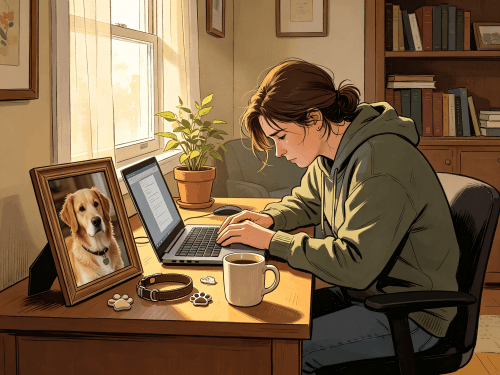
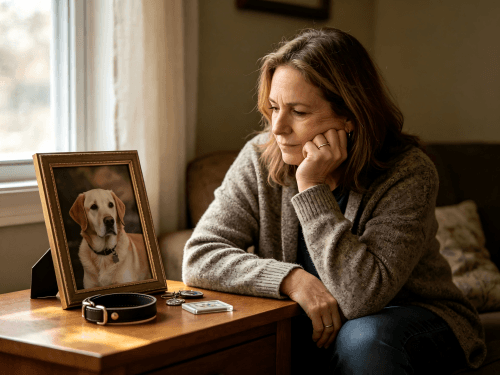
Other days, a tiny reminder—a leash by the door or an unopened bag of treats—can bring everything rushing back.
Healing doesn't mean forgetting.
It means slowly learning to carry both love and loss together.
There isn't a "right" way to grieve.
Instead of rushing yourself to feel better, try focusing on ways to remember the joy your puppy brought into your life.
Some people find comfort in talking about their puppy with family and friends.
Others write a letter expressing everything they wish they could still say.
You might create a small photo album or collect your favorite pictures in one place.
Some families keep a favorite toy or collar in a memory box.
Others plant flowers, light a candle on special days, or create a quiet space at home where they can remember their companion.
If you're looking for ideas, 10 Meaningful Pet Keepsake Ideas to Remember Your Beloved Companion offers thoughtful ways to preserve those precious memories.
Many pet parents also choose to keep a favorite photo, paw print, or personalized keepsake close. These small reminders don't take away the grief, but they can provide comfort by celebrating the love that continues long after goodbye.
If you're considering a memorial but aren't sure what feels right, How to Choose the Right Pet Memorial Keepsake may help you explore options that reflect your puppy's unique place in your heart.
Your puppy may have only been part of your life for a short time.
But to them, you were their whole world.
You gave them safety.
Warmth.
Food.
Gentle hands.
A place to sleep.
Someone to trust.
Those experiences mattered far more than the number of weeks or months you shared.
Love isn't measured in years.
It's measured in moments.
And even a short life can be filled with countless moments of kindness, comfort, and joy.
If you're losing a puppy suddenly, please don't let anyone convince you that your grief is "too much."
The heartbreak you feel today reflects the hopes, dreams, and unconditional love you had already begun building together.
Your puppy's life may have been brief, but the love you shared is something you'll carry for many years to come.
If you'd like to honor your puppy's memory, we'd love to hear about them. Share their name, their funniest habit, or the little thing that always made you smile. Sometimes, telling their story is one of the most meaningful ways to keep their memory alive.
Even after a short time, puppies quickly become part of our daily routines and future plans. The depth of grief reflects the strength of the bond, not the length of time you were together.
Yes. Many pet owners form deep emotional attachments within days or weeks. Your grief is valid regardless of how long your puppy was with you.
Give yourself permission to grieve, talk about your puppy, keep favorite photos, write down memories, or create a small memorial. Healing takes time, and there is no right or wrong timeline.
While you may always miss your puppy, many people find that the intense pain gradually softens over time. The love remains, but the memories slowly become easier to carry.
June 29, 2026
How many days off work after losing a pet? Learn how pet loss can affect work, whether taking bereavement leave is possible, and how to return to work while grieving.
June 27, 2026
Feeling guilty after losing your dog? Learn why pet loss guilt happens, why you feel like you failed your dog, and how to find peace after saying goodbye.

June 25, 2026
Learn how to cope after losing a dog when your home feels empty. Understand daily grief, missing routines, and gentle ways to remember your beloved companion.