Free US Shipping on orders $100+
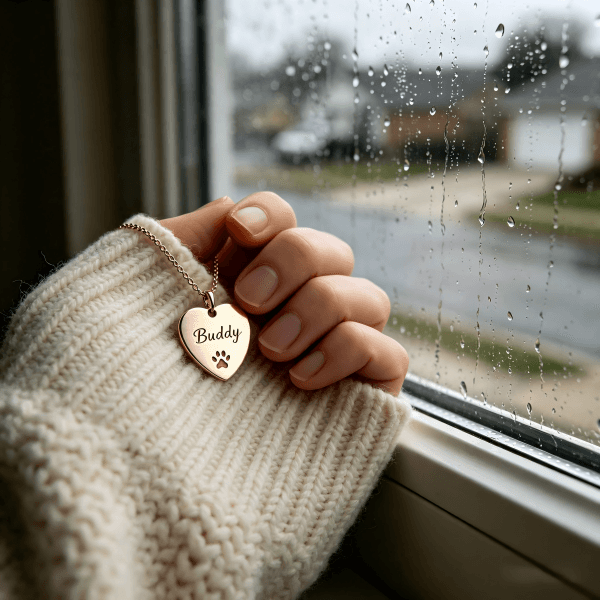
One of the strangest parts of losing a pet is how lonely it can feel — even when you're surrounded by people who care about you.
Friends may check in.
Family members may try to comfort you.
Coworkers may offer sympathy.
And yet, something still feels isolating.
Because the grief isn't only about loss itself. It's about losing a relationship that existed quietly inside everyday life. A relationship built from routines, habits, eye contact, companionship, and thousands of small moments nobody else fully witnessed.
That's why pet grief often feels deeply personal in ways that are difficult to explain.
One painful reality after losing a pet is realizing that some people simply don't understand the emotional depth of the bond.
They may say things like:
"It was just a dog."
"You can always get another cat."
"At least you had many good years."
Most people don't mean harm when they say these things. Often, they simply haven't experienced that kind of connection themselves.
But hearing those responses can make grief feel even lonelier.
Because what you're mourning isn't replaceable.
You're grieving a specific personality.
A specific routine.
A specific presence that existed nowhere else in the world.
Many people underestimate how emotionally regulating pets can be.
They greet us without judgment.
They stay near us during difficult days.
They create consistency when life feels uncertain.
For some people, pets are the first presence they see every morning and the last comforting presence before sleep.
That kind of emotional attachment runs deep.
And when it disappears, the nervous system notices immediately.
The loneliness after pet loss isn't always social loneliness.
Sometimes it's the absence of emotional safety.
After losing a pet, even familiar environments can suddenly feel unfamiliar.
The house sounds different.
The mornings feel slower.
Even coming home can feel emotionally strange.
You unlock the door, step inside, and for a split second your brain still expects them to appear.
That tiny moment of expectation followed by reality can feel heartbreaking over and over again.
People often think grief lives only in major emotional breakdowns. But much of pet grief actually lives in silence, routine, and interruption.
Oddly enough, pet grief can sometimes feel strongest when surrounded by people.
Especially when everyone else seems emotionally "normal."
You may find yourself smiling during conversations while privately feeling exhausted inside. You may avoid bringing up your pet because you don't want to make others uncomfortable. Or because you worry they won't understand.
Over time, many grieving pet owners begin carrying their sadness quietly.
Not because the grief becomes smaller.
But because it becomes more internal.
Healing from pet loss rarely happens through one big moment. More often, it happens through small forms of emotional support repeated consistently.
Simple things can make a difference:
Taking walks without forcing yourself to "feel better."
Looking through photos when you're ready.
Talking about your pet with someone who truly understands.
Writing memories down before they fade into fragments.
Some people also find comfort in keeping physical reminders nearby — not as a way of staying stuck in grief, but as a way of maintaining connection gently.
A framed picture.
A paw print.
An engraved memorial necklace worn under a sweater where nobody else even notices.
Sometimes healing begins with allowing love to remain visible.
One of the most damaging ideas around grief is the belief that it should follow a timeline.
But pet grief is deeply individual.
Some people cry constantly for weeks.
Others become emotionally numb.
Some avoid photos completely.
Others look at them every day.
None of these responses are wrong.
Grief reflects attachment, personality, memory, and emotional history all at once. Comparing your healing process to someone else's usually creates unnecessary guilt.
The truth is simple:
If the bond mattered deeply, the grief probably will too.
Many grieving pet owners quietly carry another fear beneath the sadness:
"What if I slowly forget them?"
The sound of their bark.
The way they stretched after naps.
The feeling of them following you from room to room.
This fear often explains why memorial objects become emotionally important after loss. They help preserve details that feel too precious to lose completely.
A photo captures expression.
A keepsake preserves presence.
A memorial necklace can become something you instinctively reach for during difficult moments.
These things don't erase grief.
But they can soften the feeling that memories are slipping away.
Pet grief can feel lonely because the relationship itself was deeply personal.
Your pet existed inside ordinary moments nobody else fully saw — quiet mornings, difficult nights, routines so familiar they became part of your emotional foundation.
So when people struggle to understand the depth of your sadness, it doesn't make your grief less real.
It simply means the bond was uniquely yours.
Over time, loneliness slowly changes shape. The silence becomes easier to carry. The memories begin feeling warmer than painful. And eventually, love starts taking up more space than loss itself.
At Rempaw, that continuing love is what inspires every memorial piece — creating small, meaningful reminders that help people keep their companions close in the moments they're missed most.
July 1, 2026
Feeling guilty after losing a pet and never getting the chance to say goodbye? Learn why these feelings happen and how to cope with regret, anger, and traumatic pet loss.
June 29, 2026
How many days off work after losing a pet? Learn how pet loss can affect work, whether taking bereavement leave is possible, and how to return to work while grieving.
June 21, 2026
Learn how to cope after losing a dog when your home feels empty. Find comfort in memories, belongings, and gentle ways to heal after losing your companion.