Free US Shipping on orders $100+
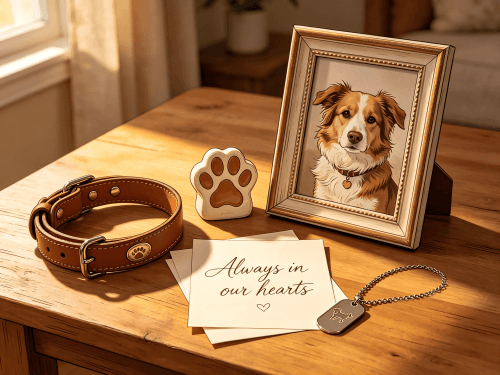
Walking into your home after losing your dog can be one of the hardest moments of the day.
For years, opening the door meant seeing them.
Maybe they were waiting by the entrance with a wagging tail. Maybe they lifted their head from their favorite spot on the couch. Maybe they walked over slowly because they were older, but they were still there.
Then suddenly, the house is quiet.
Their bed is still in the corner. Their collar may still be hanging by the door. Their toys may still be sitting where they left them.
And a part of you still expects them to appear.
Many dog owners describe this feeling as almost forgetting for a moment that their companion is gone. You walk into another room and think, "Where is my dog?" before reality catches up again.
If you are wondering how to cope after losing a dog, know that this experience is a natural part of loving someone who was part of your everyday life.
Your home feels different because your dog was never just living in your home.
They were part of your life.
A dog's presence becomes connected to hundreds of small moments.
The morning walk.
The sound of their paws on the floor.
The way they looked at you when you came home.
The little routines you never thought about until they disappeared.
When your dog passes away, your heart understands the loss, but your daily habits may still expect them to be there.
You might still look toward their favorite sleeping place.
You might still prepare food at the usual time.
You might still listen for their movements in another room.
These moments can feel painful because your brain spent years learning that your dog belonged in those spaces.
The empty room is not only an empty room.
It is the place where memories happened.
This is why many people say they can't stop crying after losing their dog. They are not only grieving one moment. They are adjusting to countless small changes throughout every day.
Your dog was part of your routine, your comfort, and your sense of home.
One of the most difficult decisions after losing a dog is deciding what to do with their things.
Their collar.
Their favorite blanket.
Their toys.
Their food bowls.
Some people remove everything immediately because seeing these items feels too painful.
Others cannot move anything because those belongings feel like the last connection they have.
There is no right way.
You do not have to make every decision right away.
Grief does not follow a schedule.
If you are not ready, it is okay to leave things exactly where they are for a while.
A collar sitting on a shelf or a favorite toy kept in a special place does not mean you are unable to move forward.
It means your dog mattered.
Some people find comfort in creating a memory box with meaningful items, such as:
A memory box can become a place where sadness slowly turns into gratitude.
Instead of only thinking about the day you lost your dog, you create a place that celebrates the years you shared together.
You can also create a small remembrance space with framed photos, flowers, or other keepsakes that remind you of their personality.
Many grieving dog owners ask:
"When will I feel normal again?"
The honest answer is that grief changes.
It may not disappear completely, because love does not disappear completely.
At first, memories may feel painful.
Looking at photos might bring tears.
Walking past their favorite place in the house might feel overwhelming.
But slowly, the memories often begin to change.
The photo that once only reminded you of the loss may eventually remind you of a happy moment.
The story that once made you cry may someday make you smile.
Healing does not mean forgetting your dog.
It means learning how to carry their memory in a different way.
Some days may still be difficult. Holidays, anniversaries, or unexpected reminders can bring sadness back.
That does not mean you are starting over.
It simply means your dog was important.
Many pet owners find comfort in understanding that grief comes in waves. You can learn more about this journey in:
Does Pet Grief Ever Get Easier? What Many Pet Owners Experience
After losing a dog, some people cannot imagine loving another pet again.
Others feel the quietness of their home and wonder if another dog could bring comfort.
Both feelings are normal.
A new dog is not a replacement.
Your dog had their own personality, their own habits, and their own special place in your heart.
No other dog could take their place.
But someday, another dog may create a completely new relationship with you.
Loving another companion does not erase the love you had before.
And waiting does not mean you are stuck.
Everyone has their own timeline.
Some people are ready quickly. Others need much more time.
The important thing is making that choice because your heart is ready, not because you feel pressured.
If you are thinking about this step, you may find this helpful:
Should You Get Another Pet After Loss? When It Feels Right—and When It Doesn't
Many people find comfort in creating something that keeps their dog's memory close.
This can be as simple as keeping a favorite photo or displaying their paw print.
Some meaningful remembrance ideas include:
For some dog owners, a memorial necklace or personalized keepsake becomes a quiet reminder that their bond continues.
It does not replace having them beside you.
It simply gives your love a place to stay.
Your dog was part of your everyday life for years. It is natural to want something that honors that connection.
You can explore more remembrance ideas here:
Pet Remembrance After Loss: How We Keep Love and Memory Alive
The hardest part of losing a dog is accepting that the routine has changed.
The walks are different.
The house is quieter.
The little moments you shared are now memories.
But the love you gave your dog did not disappear.
The years together still happened.
The comfort they gave you was real.
The happiness they brought into your life was real.
Your dog remains part of your story.
And even though your home may feel empty right now, the love that filled that space will always belong to you.
June 19, 2026
Sudden pet loss shock can leave you feeling numb and lost. Understand why unexpected loss feels unreal and how to cope after losing a beloved pet.
June 18, 2026
Why can't my brain accept my pet is gone? Understand pet loss shock, grief habits, guilt, and gentle ways to keep your beloved companion's memory alive.
June 17, 2026
Experiencing pet burial regrets after losing your dog or cat? Learn how to find peace, understand your choice, and honor your pet's memory.