Free US Shipping on orders $100+

It's been three months since your dog passed away.
Most days, you manage to get through work. You answer messages, run errands, and do all the things you're supposed to do. From the outside, life probably looks normal again.
But then something small happens.
You find an old photo while scrolling through your phone.
You hear a dog bark that sounds like theirs.
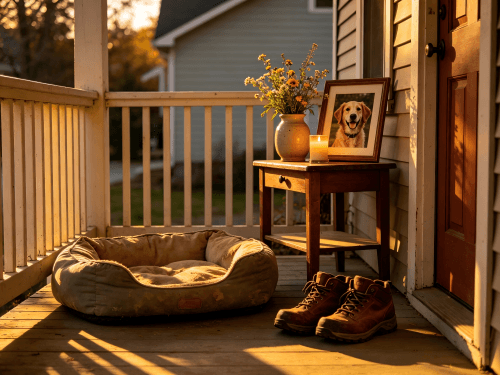
You walk past the spot where their bed used to be.
And suddenly, you're crying all over again.
In moments like these, many grieving pet owners ask the same question:
Does pet grief ever get easier?
Or perhaps more honestly:
Will it always hurt this much?
If you're still crying after losing your dog or cat weeks, months, or even years later, you're not alone. Pet loss often reaches deeper into our daily lives than many people realize.
The good news is that for most people, grief does change over time.
Not because the love becomes smaller.
But because we slowly learn how to carry it differently.
One reason pet grief can feel so intense is that pets are woven into the fabric of everyday life.
Unlike many relationships that exist primarily through conversation or occasional visits, pets become part of our routines from the moment we wake up until we go to sleep.
They greet us in the morning.
They follow us through the house.
They wait by the door.
They curl up beside us during quiet evenings.
When they're suddenly gone, the absence is everywhere.
Many grieving pet owners are surprised by how many ordinary activities become painful after loss.
Filling a water bowl.
Going for a walk.
Coming home from work.
Even hearing the silence inside the house can feel overwhelming.
These routines may seem small, but they represent thousands of shared moments accumulated over years.
That is why grief often appears in places we least expect.
Pets love us during our best days and our worst days.
They don't care about job titles, mistakes, appearance, or success.
For many people, a dog or cat provides one of the purest forms of companionship they will ever experience.
Losing that source of unconditional love can feel like losing a piece of emotional stability itself.
Many pet owners describe having one animal that felt different from all the others.
A pet who seemed to understand them instinctively.
A companion who appeared during an important chapter of life.
A relationship that felt unusually deep.
People often refer to these animals as their "soul pet."
When a soul pet dies, grief can feel especially profound because the bond itself was extraordinary.
Pets quietly witness our lives.
They are present during celebrations, heartbreaks, moves, illnesses, and ordinary afternoons.
When they leave, we don't just lose an animal.
We lose a daily companion who shared countless moments nobody else fully understands.
For a deeper look at why pet grief can feel so powerful, see:
Understanding Pet Loss Grief: Why It Hurts and How Healing Works
Many grieving pet owners feel guilty admitting this.
They wonder why losing a dog or cat seems to hurt more than the loss of certain relatives.
The truth is that grief isn't a measure of how much someone "should" matter.
It's a reflection of attachment.
Some family members may live far away.
You may see them only occasionally.
Your pet, however, may have been beside you every single day for years.
Shared daily life creates powerful emotional bonds.
The frequency of connection matters.
Many people share parts of themselves with pets that they never reveal to anyone else.
Pets offer comfort without judgment.
They sit beside us during loneliness.
They stay close during difficult seasons of life.
For some people, a pet becomes their primary source of emotional support.
When that relationship ends, the grief can feel enormous.
If you've ever thought:
"Why am I still crying after losing my dog?"
or
"Why does this hurt more than I expected?"
Please know that many pet owners ask the same questions.
Your grief is not a sign that something is wrong.
It is a sign that the relationship mattered deeply.
One of the biggest misconceptions about grief is the idea that healing follows a straight line.
Most people expect sadness to gradually decrease day by day.
But pet grief healing rarely works that way.
In the beginning, grief often feels constant.
Everything reminds you of your pet.
Every room feels different.
Every routine feels incomplete.
Over time, however, grief often becomes less overwhelming.
The pain doesn't necessarily disappear.
Instead, it changes shape.
You may have a wonderful week and then suddenly break down after seeing an old photo.
You may feel okay for a month and then become emotional on an anniversary.
This doesn't mean you're moving backward.
It simply means grief is evolving.
Many pet owners continue experiencing emotional triggers long after loss.
Common triggers include:
These moments can still hurt.
But they often become easier to navigate with time.
If you're wondering how long this process typically lasts, you may find comfort in:
Healing often happens so gradually that people don't notice it right away.
There is rarely a single moment where grief suddenly disappears.
Instead, small changes begin to appear.
At first, every memory may bring tears.
Later, you may find yourself remembering a funny habit or favorite moment without feeling completely overwhelmed.
There may come a day when an old picture makes you smile before it makes you cry.
That doesn't mean you're forgetting.
It means love is beginning to coexist with memory in a gentler way.
Many grieving pet owners initially avoid conversations about their pet because the emotions feel too intense.
Over time, sharing stories may begin to feel comforting rather than unbearable.
The pain may still exist.
But gratitude starts appearing too.
Gratitude for the years you shared.
Gratitude for the memories.
Gratitude for the love.
These are often quiet signs that healing is happening.
One of the most damaging things people do during grief is compare themselves to others.
Someone else may seem "fine" after a few months.
Another person may struggle for years.
Neither experience is wrong.
Your personality, relationship, support system, and life circumstances all influence how grief unfolds.
There is no universal schedule.
Grief is not a competition.
You do not earn extra points for healing quickly.
Nor should you feel ashamed if your grief lasts longer than expected.
Your timeline belongs to you.
If grief feels isolating, you may also relate to:
Why Pet Grief Can Feel Lonely Even Around Other People
Many grieving pet owners find comfort in creating meaningful ways to remember their companion.
Remembrance isn't about staying stuck in grief.
It's about keeping love present.
A memory box can hold:
These items become a personal collection of memories.
Many people treasure clay paw prints or ink impressions as lasting reminders of their pet's unique presence.
Some pet owners find comfort in wearing a small reminder of their companion every day.
A personalized necklace engraved with a pet's name, photo, or paw print can provide a quiet sense of connection during difficult moments.
What makes memorial jewelry meaningful isn't the jewelry itself.
It's the memory attached to it.
If you'd like more ideas, read:
Personalized Pet Memorial Jewelry That Feels Truly Meaningful
Simple rituals can be surprisingly healing.
You might:
These practices help keep the relationship present in a healthy and loving way.
So, does pet grief ever get easier?
For many people, yes.
But perhaps not in the way they originally expect.
The goal isn't to stop loving your pet.
The goal isn't to forget.
And healing doesn't mean pretending the loss no longer matters.
Instead, grief slowly becomes something you can carry.
The sharp edges soften.
The memories become easier to revisit.
The tears appear less often.
And little by little, love begins taking up more space than pain.
If you're still crying after losing your dog or cat, please know that you're not failing at grief.
You're experiencing the natural result of a deep and meaningful bond.
The intensity of your grief is not a reflection of weakness.
It is a reflection of love.
And love, even after loss, has a remarkable way of staying with us.
July 15, 2026
Was your pet your soulmate? Discover why some dogs and cats become our deepest emotional companions, why losing a soulmate pet hurts so much, and gentle ways to honor their memory.

July 11, 2026
"I want people to know my dog existed." If you've lost a beloved dog and fear they'll be forgotten, you're not alone. Learn why sharing memories is a natural part of grief and meaningful ways to honor your dog's life.

July 10, 2026
If your cat seemed fine yesterday but passed away today, you're not alone. Learn why some illnesses progress silently, why guilt is so common, and gentle ways to begin healing after sudden pet loss.