Free US Shipping on orders $100+
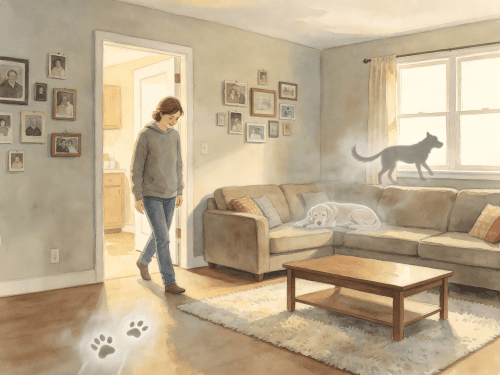
Walking through the front door used to mean one thing: your dog was there.
Maybe you heard little paws moving across the floor. Maybe your dog waited by the window, ran toward you, or simply lifted their head from their favorite spot because you were finally home.
After losing a dog, those small moments can become some of the hardest parts of the day.
You may still look toward the corner where their bed used to be. You may reach for the leash before remembering there is no walk to take. You may wake up in the morning and expect to hear the familiar sounds of your companion starting the day.
Many people are surprised by how painful the quiet can feel.
Losing a dog is not only losing a pet. It is losing a daily presence, a routine, and a relationship that was woven into almost every part of life.
If your home feels empty after losing your dog, these feelings are a natural part of grief. Understanding why these moments hurt can help you slowly adjust to a life that looks different.
For a deeper understanding of why losing a pet can feel so overwhelming, you can also read Understanding Pet Loss Grief: Why It Hurts and How Healing Works.
A dog becomes part of the rhythm of your everyday life.
They are there during your morning coffee, your evening routines, your quiet moments, and even the ordinary parts of the day you never thought much about.
Maybe your dog always followed you from room to room.
Maybe they slept beside your bed every night.
Maybe they waited patiently while you prepared their meals.
These routines become so familiar that we often do not notice how much they shape our lives until they suddenly disappear.
After loss, the house feels different because the patterns you shared with your dog are gone.
The empty food bowl.
The untouched toys.
The quiet space beside the couch.
The absence of a familiar greeting.
These things are not just objects or habits. They are reminders of a relationship that mattered.
Many grieving owners experience this feeling of searching for their pet in familiar places. You may find yourself looking toward the doorway or checking a favorite sleeping spot without even thinking.
This is something many people describe in The Unexpected Places We Still Look for Our Pets.
One of the most confusing parts of pet loss is knowing your dog is gone, but still expecting them to appear.
You may think:
"Why did I just look for him?"
"Why do I still wait for her to come running?"
"Why does part of me expect everything to go back to normal?"
This happens because your brain learned your dog's routines over many years.
Your mind remembers:
Those patterns do not disappear immediately after loss.
Your heart understands what happened, but your daily habits need time to catch up.
This does not mean you are unable to move forward. It means your dog was deeply connected to your everyday life.
Many people experience similar feelings after loss, including still reaching for their pet or expecting their routines to continue. You can read more about this experience in Why Do I Still Reach for My Pet? The Small Habits That Stay After Loss.
Often, it is not the big moments that hurt the most.
It is the tiny ones.
The way your dog looked at you when you entered the room.
The sound they made when they wanted attention.
The way they followed you even when they had nowhere to go.
The little habits that once felt ordinary suddenly become precious memories.
Some dog owners miss:
These everyday moments are often where grief appears.
You may find yourself remembering a simple morning together more strongly than a special event.
That is because love is often built through ordinary days.
The small things your dog did were small only on the surface. To you, they were part of your life together.
If you want to explore why these simple routines can feel so powerful after loss, The Little Things We Miss Most After Losing a Pet shares more about these quiet reminders.
Many people struggle with what to do with their dog's belongings.
Should you put the bed away?
Should you keep the collar?
Should you pack up the toys?
There is no right answer.
Some people need to keep everything exactly as it was for a while. Others find comfort in creating a special place for meaningful items.
You do not need to make every decision immediately.
You can keep:
Some pet owners create a memory box where they keep these items together.
A memory box can become a place where you store reminders of your dog's personality and the life you shared.
You can also explore more ideas in What to Put in a Pet Memory Box: Meaningful Ideas to Keep Their Memory Alive.
Many people wonder:
"When will my home stop feeling so empty?"
The truth is that grief usually does not disappear suddenly.
Instead, it changes.
At first, memories may bring only sadness. Looking at photos may feel impossible. Walking into an empty room may feel overwhelming.
Over time, those same memories may begin to carry warmth along with sadness.
You may think about your dog and smile before you cry.
You may remember a funny habit and feel grateful instead of only heartbroken.
Healing does not mean forgetting your dog.
It means learning how to carry their memory in a new way.
Many pet owners find comfort in understanding that grief changes over time. Does Pet Grief Ever Get Easier? What Many Pet Owners Experience explores this journey in more detail.
Some people wonder if bringing another dog home will help.
Others feel guilty even thinking about it.
Both feelings are normal.
A new dog cannot replace the one you lost.
Every pet has their own personality, their own habits, and their own place in your heart.
Some people are ready for another companion after a few months. Others need years. Some never feel ready.
There is no timeline you have to follow.
A new relationship does not erase an old one.
Your dog will always be part of your story.
For anyone struggling with this decision, Should You Get Another Pet After Loss? When It Feels Right—and When It Doesn’t may help you think through your feelings.
As time passes, many pet owners look for ways to keep their dog's memory close.
Some choose simple reminders:
For some families, wearing a small reminder of their pet feels comforting. A personalized memorial necklace, engraved keepsake, or paw print frame can become a meaningful way to honor the bond they shared.
Some families choose personalized memorial keepsakes from Rempaw, such as engraved necklaces or paw print frames, to keep a small reminder of their companion close.
There is no single way to remember a dog you loved.
The right memorial is simply something that feels connected to your relationship.
The hardest part of losing a dog is often found in the smallest moments.
The empty spot on the couch.
The quiet house.
The instinct to call their name.
These moments hurt because your dog was not just part of your home.
They were part of your life.
Your routines may change, but the love you shared does not disappear.
Your dog remains in the memories, habits, and little moments that shaped your days together.
What is one small habit you miss most about your dog?
Sharing that memory can be a beautiful way to keep their story alive.
It is common to continue expecting your dog to appear after loss. Your brain remembers years of routines and habits, so these reactions can continue even after you understand they are gone.
Small things often carry emotional meaning because pets are part of everyday life. A sleeping spot, a toy, or a daily routine can remind you of the connection you shared.
Yes. Missing daily routines is one of the most common parts of pet grief. Those routines represented companionship, comfort, and love.
You can write down favorite memories, save photos and videos, keep meaningful belongings, create a memory box, or choose a keepsake that helps preserve those everyday moments.
June 21, 2026
Learn how to cope after losing a dog when your home feels empty. Find comfort in memories, belongings, and gentle ways to heal after losing your companion.
June 12, 2026
Struggling to decide when it's time to say goodbye to your dog? Learn how veterinarians and pet owners evaluate quality of life when good days and bad days coexist.
June 8, 2026
Many grieving pet owners regret their final interaction with their dog or cat. If you're struggling with pet loss guilt, this gentle guide may help you see the bigger picture of your relationship.