Free US Shipping on orders $100+
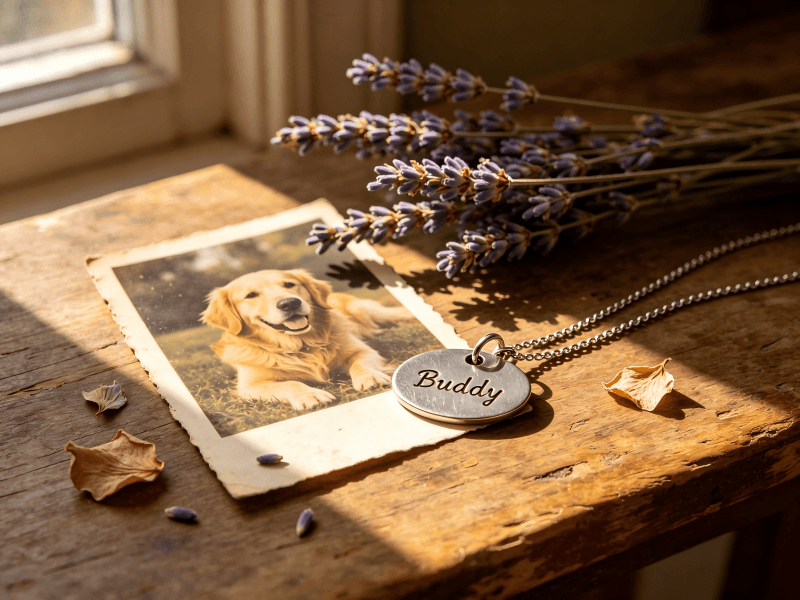
After losing a pet, many people discover something unexpected:
Love does not disappear when physical presence does.
Instead, it quietly shifts into memory.
A favorite sleeping spot still catches your attention.
You still expect to hear familiar footsteps in the hallway.
Certain moments of the day still feel connected to them somehow.
For grieving pet owners, remembrance becomes more than simply "looking back." It becomes a way of staying emotionally connected to the bond that shaped everyday life for so long.
Pet remembrance is deeply personal. Some people create small rituals. Others keep photos nearby, preserve collars, wear memorial jewelry, or quietly revisit memories in private moments.
None of these actions are about "holding onto grief."
They are about honoring love that still matters.
One reason pet memories remain so vivid is because pets become part of our emotional routines.
Unlike many relationships that exist mostly through conversation, pets are woven into physical daily life:
morning routines,
evening quiet,
shared spaces,
small habits repeated over years.
That is why memories often feel unexpectedly alive after loss.
The brain continues connecting ordinary life to the emotional presence of someone it deeply loved.
For many people, these memories appear automatically:
hearing a sound,
walking into a familiar room,
or reaching for something out of habit before remembering they are gone.
Far from being unhealthy, these moments often reflect the depth of emotional attachment and companionship.
You may also relate to:
The Little Things We Miss Most After Losing a Pet
After a pet passes away, familiar spaces can suddenly feel emotionally different.
The couch feels emptier.
The kitchen feels quieter.
Even walking past their favorite corner can trigger sadness unexpectedly.
This happens because emotional memory is closely tied to physical environments.
Over time, pets become associated with specific locations, sounds, and routines inside our homes. Their absence changes the emotional feeling of those spaces.
For many grieving pet owners, certain places remain emotionally significant long after loss:
the window where their cat used to sit,
the hallway where their dog waited every morning,
or the chair where they always slept nearby.
These emotional reactions are often part of remembrance itself.
Related reading:
The Unexpected Places We Still Look for Our Pets
There is no single "correct" way to honor a beloved pet after loss.
Remembrance is deeply individual.
Some people prefer quiet personal rituals, while others create visible memorial spaces at home. What matters most is finding something that feels emotionally genuine.
Many pet owners find comfort in:
These acts may seem small from the outside, but emotionally they can provide a strong sense of continued connection.
If you're looking for ideas, you may also enjoy:
What to Put in a Pet Memory Box: Meaningful Ideas to Keep Their Memory Alive
and
9 Thoughtful Ways to Remember a Pet After They Pass Away
One reason memorial objects feel so meaningful is because grief is not only emotional — it is also physical.
We miss seeing our pets.
Touching them.
Hearing them nearby.
Physical keepsakes can sometimes help bridge that emotional distance.
A collar hanging by the door.
A paw print impression.
A favorite toy kept safely in a drawer.
An engraved necklace worn close to the heart.
These objects often become emotional anchors during grief.
Not because they replace the pet, but because they preserve a feeling of connection that words alone sometimes cannot hold.
For many people, memorial jewelry becomes meaningful in this quiet way. A personalized piece can serve as a gentle reminder that love and memory still remain part of daily life.
One of the most comforting realizations after pet loss is understanding that remembrance is not about staying trapped in sadness.
It is about allowing love to continue existing in a new form.
Over time, grief usually changes.
The sharpness softens.
The memories become easier to revisit.
And remembrance slowly shifts from pain toward warmth.
Many grieving pet owners eventually notice that they begin smiling at memories more often than crying over them.
Not because the bond became smaller.
But because love found a quieter place to live.
Sometimes that connection appears through habits.
Sometimes through photographs.
Sometimes through small keepsakes carried every day.
And sometimes, it simply exists in the way a pet permanently changes the emotional shape of a person's life.
You may also find comfort in:
Signs Your Pet Is Still With You: 10 Comforting Ways They Stay in Your Heart
and
Do Pets Know They Are Loved? What Science and Everyday Moments Tell Us
Pet remembrance is not about refusing to let go.
It is about honoring a relationship that mattered deeply.
The routines, memories, habits, and emotional traces pets leave behind often remain part of us long after loss. Through remembrance, many people slowly discover that grief and love can exist together peacefully.
At Rempaw, that belief inspires every memorial piece we create — gentle keepsakes designed to help pet owners carry memory, connection, and love forward in a meaningful way.