Free US Shipping on orders $100+
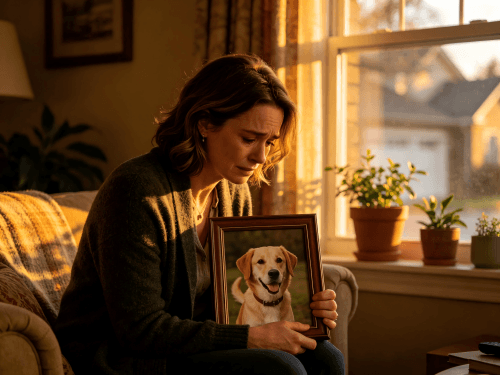
There is a sentence many grieving dog owners quietly repeat after loss.
"I thought I had more time."
Sometimes it comes after a diagnosis that progressed faster than expected.
Sometimes it follows an unexpected emergency.
Sometimes there was no warning at all.
No matter how the loss happened, the feeling is often the same.
You believed there would be another walk.
Another weekend together.
Another birthday.
Another chance to say goodbye.
And when that future suddenly disappears, grief arrives carrying not only sadness, but shock, regret, and a deep sense of unfinished time.
If you've found yourself thinking, "I wasn't ready to lose my dog," you are far from alone.
When we share our lives with a dog, we naturally imagine tomorrow.
We picture future walks.
Future vacations.
Future mornings when they greet us at the door.
Most of the time, we don't even realize we're making these assumptions.
We simply believe there will be more time.
That belief becomes part of daily life.
So when a dog passes away unexpectedly—or even sooner than we hoped—the loss isn't limited to the present moment.
We also grieve the future we imagined together.
One of the hardest truths about loving a dog is that almost nobody feels ready when the time comes.
Even families who know their dog is aging often say the same thing afterward:
"I thought we had longer."
That's because love naturally wants more.
More walks.
More cuddles.
More photos.
More ordinary days.
No amount of time ever feels completely sufficient when saying goodbye to someone who brought so much joy into your life.
After losing a dog, many people replay memories repeatedly.
They think:
These thoughts are incredibly common.
But they often come from grief rather than reality.
When we lose someone we love, the mind searches for explanations and ways to regain control over something that feels uncontrollable.
Unfortunately, this often creates guilt where none truly belongs.
Many loving pet owners carry regrets after loss, even when they provided years of excellent care and companionship.
When people imagine grief, they often think about major milestones.
The last goodbye.
The final vet visit.
The moment they received difficult news.
But what many owners miss most are the ordinary moments.
The sound of paws on the floor.
The way their dog waited near the kitchen.
The familiar routine before bedtime.
The excitement when picking up a leash.
These small memories often become some of the most powerful reminders of love.
Related reading:
Losing a dog unexpectedly can create a unique form of grief.
There is sadness.
But there is also disbelief.
Part of you knows what happened.
Another part still expects them to walk into the room.
Many people describe feeling emotionally numb during the first days or weeks after loss.
Others find themselves repeatedly telling the story because it still doesn't feel real.
This reaction is especially common after sudden or unexpected pet loss.
For a deeper look at this experience, you may find comfort in:
Many grieving owners worry that healing means forgetting.
But healing rarely works that way.
Most people don't stop missing their dog.
Instead, the relationship slowly changes.
At first, every memory may bring tears.
Later, some memories begin bringing smiles.
The sadness doesn't disappear completely.
It simply learns to exist alongside gratitude.
You begin remembering not only the day you lost them, but the years you shared together.
One of the most comforting discoveries after loss is realizing that connection doesn't end when physical presence ends.
Many people find meaningful ways to honor their dog's memory.
Some create photo albums.
Some keep memory boxes.
Some frame paw prints.
Others wear personalized keepsakes that help them feel connected throughout the day.
These memorials aren't about holding onto grief.
They're about holding onto love.
Perhaps the hardest truth of all is this:
Even if you had another month, another year, or even several more years, saying goodbye would still hurt.
Because love naturally wants more time.
The fact that you wish for one more walk, one more cuddle, or one more ordinary day isn't a sign that you failed to prepare.
It's a sign that the bond mattered.
And bonds that meaningful rarely feel finished.
If you've been carrying the thought, "I thought I had more time with my dog," please know that countless pet owners have felt exactly the same way.
It's one of the most common and heartbreaking experiences after loss.
You are grieving not only the moments you shared, but also the moments you hoped were still ahead.
Over time, the sharpness of that pain often softens.
The memories become easier to revisit.
The gratitude grows stronger.
And while you may always wish for more time, you may also begin to recognize something important:
The love you shared was never measured only by how long it lasted.
It was measured by how deeply it changed your life.
At Rempaw, we believe those memories deserve a place in your everyday life through meaningful keepsakes that honor the companionship, loyalty, and love that never truly leaves your heart.

July 5, 2026
Losing a puppy suddenly can bring overwhelming grief, even if you only shared a few weeks together. Learn why the pain feels so deep and gentle ways to cope with the loss.

June 13, 2026
My pet died but I don't feel sad yet. Learn why delayed pet grief happens, why numbness is normal, and how grief appears after losing a beloved companion.
June 12, 2026
Struggling to decide when it's time to say goodbye to your dog? Learn how veterinarians and pet owners evaluate quality of life when good days and bad days coexist.