Free US Shipping on orders $100+
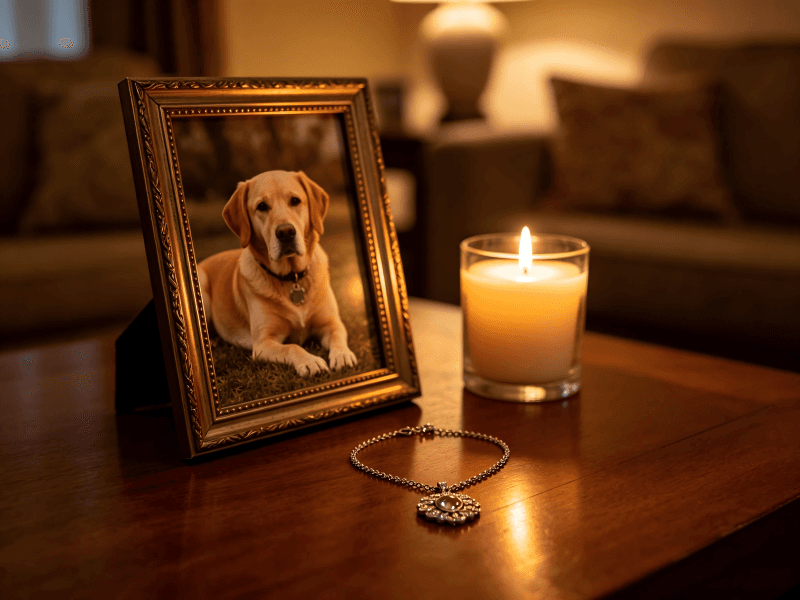
Sometimes pet grief returns quietly.
Not during anniversaries.
Not during major life moments.
But in completely ordinary situations.
Walking past a pet aisle in a store.
Hearing a sound that feels familiar.
Finding an old photo while cleaning.
Reaching for your phone to look at pictures you have already seen hundreds of times.
And suddenly, grief comes rushing back.
Many grieving pet owners feel confused when this happens, especially months or years after loss. They wonder if something is wrong with them or if they are supposed to be over it by now.
But grief rarely follows a straight path.
In many ways, pet grief behaves more like emotional memory than a problem that eventually disappears completely.
One reason grief feels unpredictable is because emotional attachment becomes deeply connected to memory, routine, and the nervous system.
Pets are part of everyday life in ways we often do not fully realize until they are gone.
The brain stores those experiences everywhere:
inside routines,
sounds,
physical spaces,
and emotional habits.
That is why even small triggers can suddenly reactivate grief long after healing has already begun.
A familiar barking sound.
An old leash found in a drawer.
The empty spot near the couch where they always slept.
These moments are not signs that healing failed.
They are signs that love created lasting emotional pathways.
Related reading:
What Grief Really Feels Like After Losing a Pet (And Why It Comes in Waves)
Many people worry that unexpected sadness means they are stuck in grief.
But emotional triggers are different from being emotionally trapped.
Most grieving pet owners gradually heal over time:
daily functioning improves,
memories become softer,
and life slowly regains emotional balance.
Yet certain memories can still reopen emotion unexpectedly.
This happens because grief and love remain connected.
In fact, many emotionally healthy people continue feeling moments of sadness years after losing someone deeply important to them — including pets.
Healing does not erase attachment.
It simply changes the intensity of pain over time.
You may also relate to:
How Long Does Pet Grief Last? Understanding the Healing Process After Losing a Pet
Some emotional triggers feel especially powerful because they reconnect us to very specific forms of memory.
For example:
Nighttime can feel particularly difficult for many grieving pet owners because silence creates more emotional space for memory to surface.
This is also why grief sometimes feels stronger during periods of stress, loneliness, or major life change. During emotionally vulnerable moments, the brain naturally returns to memories connected to comfort and attachment.
Related reading:
Why Pet Memories Sometimes Feel Stronger at Night
and
The Little Things We Miss Most After Losing a Pet
One of the strangest parts of pet grief is that memories can feel painful and comforting simultaneously.
A photo may bring tears while also bringing warmth.
An old video may hurt to watch while still feeling impossible to delete.
This emotional contradiction is extremely common.
Grief exists because attachment existed first.
That is why memories often continue carrying emotional weight long after loss itself.
Some people avoid reminders temporarily because the emotions feel too intense at first. Others revisit memories constantly because it helps them feel connected.
Neither response is wrong.
Healing usually involves slowly learning how to hold memory without becoming overwhelmed by it.
You may also connect with:
Why Some People Can't Look at Old Pet Photos Right Away
When grief suddenly returns, many people instinctively try to suppress it or snap out of it quickly.
But emotional resistance often makes grief feel heavier.
Instead, it can help to approach those moments gently.
Some people find comfort in:
These small actions can help transform sudden grief into a moment of connection instead of emotional panic.
For many grieving pet owners, memorial keepsakes become especially meaningful during these moments because they offer a quiet physical reminder that love and memory still remain close.
One reason unexpected grief feels confusing is because society often treats healing like a deadline.
But emotional bonds do not disappear simply because time passes.
Pets shape daily life deeply:
through companionship,
comfort,
routine,
and unconditional presence.
That emotional imprint often remains part of us permanently.
Over time, grief usually softens.
The sharp pain becomes gentler.
The memories become easier to revisit.
But occasional emotional waves may still appear — not because healing failed, but because love mattered.
And in many ways, that continued emotional connection is part of remembrance itself.
Unexpected grief after pet loss is far more normal than many people realize.
A sudden memory, familiar sound, or quiet moment can reopen emotion even long after healing has begun. These experiences are not signs of weakness or failure. They are reflections of attachment, memory, and love that continues beyond physical presence.
Over time, many grieving pet owners discover that grief changes shape rather than fully disappearing. What once felt unbearable slowly becomes something softer — a lasting emotional connection carried through memory, routine, and remembrance.
At Rempaw, we believe those memories deserve to be honored gently through meaningful keepsakes that help preserve closeness, comfort, and love after loss.

June 13, 2026
My pet died but I don't feel sad yet. Learn why delayed pet grief happens, why numbness is normal, and how grief appears after losing a beloved companion.
June 12, 2026
Struggling to decide when it's time to say goodbye to your dog? Learn how veterinarians and pet owners evaluate quality of life when good days and bad days coexist.
June 9, 2026
Wondering if you euthanized your cat or dog too soon? Learn why pet euthanasia guilt is so common and how many loving owners struggle with the same heartbreaking questions.