Free US Shipping on orders $100+
Some pet losses leave behind a sadness that feels different.
It is not only the pain of missing them.
It is the memory.
The moment you found out.
The phone call you received.
The unexpected goodbye.
The last time you saw them.
The image that appears in your mind when you least expect it.
Many pet owners who experience sudden loss describe something they never expected:
"I can't stop replaying my pet's death."
"I keep thinking about the last moments before my dog died."
"I wish I could go back and change what happened."
When a pet passes away peacefully after a long illness, there is often time to prepare emotionally.
There may be conversations with veterinarians.
There may be opportunities to say goodbye.
There may be moments to create closure.
But when a pet dies suddenly, the mind can struggle to understand what happened.
The loss is not only emotional.
It can feel shocking.
Confusing.
Even traumatic.
If you keep returning to the final moment, it does not mean you are choosing to stay in the pain.
It often means your mind is trying to process something that happened too quickly.
After a shocking experience, many people find that their brain repeatedly returns to the same memory.
The scene plays again.
The details feel vivid.
The questions start:
"What if I had noticed sooner?"
"What if I had been home?"
"What if I had done something differently?"
This can feel frightening, but it is a common response after a traumatic loss.
The brain naturally tries to understand events that feel unexpected or impossible.
When something happens suddenly, your mind may search for answers.
It looks for a reason.
It looks for something that could have been controlled.
This is why people often replay moments over and over.
Not because they want to suffer.
But because their brain is trying to make sense of something that feels impossible.
A sudden pet death creates a painful gap between what you expected and what actually happened.
Yesterday, your companion was part of your life.
Today, they are gone.
The mind struggles with that sudden change.
Many pet owners become afraid when the memory keeps returning.
They wonder:
"Will I always remember my pet this way?"
"Will the final moment be the only thing I see when I think about them?"
The answer is no.
Although the painful memory may feel overwhelming right now, it does not have to remain the center of your relationship.
Healing does not mean forgetting what happened.
It means the final moment slowly becomes one part of a much larger story.
A story that includes:
Their first day with you.
Their favorite habits.
The way they greeted you.
The places you went together.
The ordinary moments that made them yours.
Right now, the ending may feel louder than everything else.
But with time, the full story becomes easier to remember.
One of the hardest things about traumatic pet loss is that the brain often focuses on one painful image.
The day they died.
The moment you found them.
The goodbye you never expected.
But your pet's life was not one moment.
Their life was thousands of moments.
It was every morning they woke up beside you.
Every meal they enjoyed.
Every walk.
Every time they looked at you with trust.
Every ordinary day where they simply existed beside you.
Imagine looking at a book about your pet's life.
The final page may be painful.
But it does not erase all the chapters before it.
Your relationship was created over months or years.
Not in a single goodbye.
For many people, traumatic pet loss comes with intense guilt.
The questions can feel endless:
"I should have noticed sooner."
"I should have checked on them."
"I should have done more."
"I should have prevented this."
These thoughts are incredibly common after unexpected loss.
They often come from love.
When someone means everything to us, our minds naturally search for ways we could have protected them.
But love can also create impossible expectations.
We expect ourselves to predict things we could not have known.
We expect ourselves to prevent things we could not control.
We judge ourselves using information we only gained afterward.
This is called hindsight.
After something happens, our brain makes the outcome seem obvious.
But before it happened, you were simply living your normal life with the information you had.
You loved your pet.
You cared for them.
You gave them a life filled with safety and companionship.
One unexpected moment does not erase that.
There is a unique pain that comes with sudden loss.
When a pet has been sick for a long time, owners often experience anticipatory grief.
They know goodbye is approaching.
They may have time to prepare emotionally.
Sudden loss offers no such preparation.
There is no gradual adjustment.
No final routine.
No extra goodbye.
The world changes instantly.
This can create feelings of disbelief.
Some owners describe walking around the house expecting their pet to appear.
Others continue listening for familiar sounds.
This experience is explored more deeply in:
Why Pet Grief Comes Back Unexpectedly
because grief often appears in ordinary moments when our minds remember the life that used to be there.
You cannot force yourself to forget a painful memory.
Trying to push it away often makes it stronger.
Instead, many people find comfort in gently creating space for other memories.
Choose photos that represent your pet's personality.
Not only the final days.
Look for:
Remember who they were.
Not only what happened.
Writing can help move memories from your mind onto paper.
You can write about:
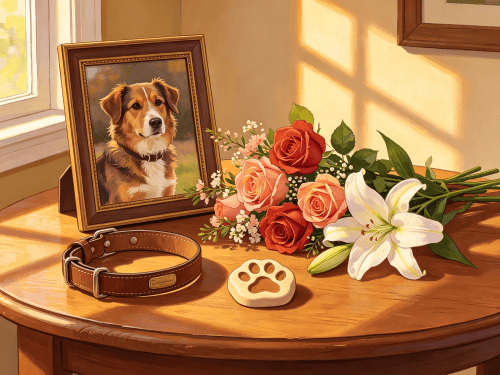
Some owners create a small place at home with:
A memorial space can remind you:
"My pet existed."
"My pet was loved."
"My pet mattered."
You can also explore:
Pet Remembrance After Loss: How We Keep Memories Alive
for more ways to honor a beloved companion.
Many grieving owners worry:
"What if my pet's last moments were not perfect?"
"What if they were scared?"
"What if I wasn't there?"
These questions come from love.
But pets do not measure relationships the way humans do.
They do not count one final day.
They know patterns.
They know your voice.
Your smell.
Your routines.
The way you cared for them.
Your pet knew the life you built together.
They knew the person who fed them.
Comforted them.
Protected them.
Loved them.
That is the relationship they experienced.
Not one painful moment.
After a traumatic loss, some people find comfort in creating physical reminders of their pet.
Not because they want to stay trapped in sadness.
But because love needs a place to continue.
Some meaningful options include:
A paw print represents something uniquely theirs.
A small reminder of the companion who shared your life.
Creating albums or displays can help shift focus from the loss itself toward the relationship.
Some owners choose personalized memorial jewelry, such as an engraved necklace, as a way to keep their pet's memory close.
A small keepsake can become a quiet reminder:
"They were here."
"They were loved."
"Our story mattered."
For some people, this kind of connection is comforting during the healing process.
You can learn more about meaningful options here:
Personalized Pet Memorial Jewelry That Feels Truly Meaningful
If you cannot stop replaying your pet's last moments, it does not mean you are broken.
It does not mean you are failing to heal.
It means something deeply important happened, and your mind is trying to understand it.
The final moment was real.
The pain is real.
But it was only one small moment in a much bigger love story.
Your pet's life was not defined by how they left.
It was defined by how they were loved while they were here.
The walks.
The routines.
The comfort.
The years together.
Those moments are still yours.
And slowly, with time, they can become louder than the memory of goodbye.

June 18, 2026
Why can't my brain accept my pet is gone? Understand pet loss shock, grief habits, guilt, and gentle ways to keep your beloved companion's memory alive.

June 17, 2026
Experiencing pet burial regrets after losing your dog or cat? Learn how to find peace, understand your choice, and honor your pet's memory.

June 13, 2026
My pet died but I don't feel sad yet. Learn why delayed pet grief happens, why numbness is normal, and how grief appears after losing a beloved companion.