Free US Shipping on orders $100+
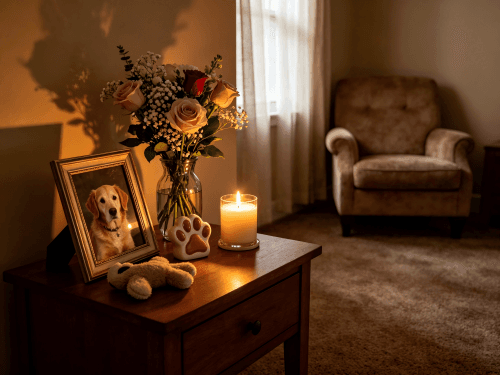
The first few days after losing a beloved pet can feel impossible to understand.
You may walk into the room and automatically look toward their favorite sleeping spot.
You may open the front door and expect to see your dog waiting for you.
You may even find yourself checking their water bowl, only to suddenly remember that they are not coming back.
For a brief moment, everything feels normal.
Then reality returns.
Your pet is gone.
Many grieving owners quietly ask the same painful question:
"Why can't my brain accept my pet is gone?"
You know what happened. You understand the loss. But something inside you still expects to hear their paws, their little noises, or their familiar routine.
This feeling can be confusing, but it is a very human response to losing someone who was deeply connected to your everyday life.
When a dog or cat lives with you for years, they become part of your daily rhythm.
Your brain remembers:
These moments happen so often that they become automatic.
Your relationship with your pet was not only emotional. It was built into hundreds of small daily habits.
This is why many people experience moments where they are still looking for their dog after they died.
It is not because they do not understand reality.
It is because their mind spent years learning that their companion was always there.
Grief often begins before our habits catch up.
Many pet owners describe this experience in a similar way: their heart knows their pet is gone, but their body still expects them to be there.
This is one reason why pet loss can feel so overwhelming.
As explained in our guide about understanding pet loss grief and healing, losing a pet means losing not only a companion but also a familiar part of everyday life.
When a pet passes away unexpectedly, the shock can feel even stronger.
One day everything seems normal.
The next day, the world has completely changed.
There is no gradual adjustment.
No time to prepare.
No chance to slowly imagine life without them.
This is why some owners experience what feels like disbelief after a sudden loss.
They think:
"I can't believe my dog is gone."
"I keep expecting my pet to come home."
"I feel like I am waiting for someone to tell me this was not real."
Sudden pet loss can create a painful distance between what you know and what you feel.
Your mind understands the facts.
Your emotions are still trying to catch up.
This is especially difficult when your pet seemed healthy or when their passing happened without warning.
Many people struggle with replaying the situation and wondering if something could have been different.
Along with sadness, many pet owners experience guilt.
They may think:
"Did I notice something too late?"
"Could I have done more?"
"Did my pet know how much I loved them?"
After euthanasia, some owners also struggle with thoughts like:
"Did I make the right decision?"
"Was it too soon?"
These feelings can become very heavy because love creates a strong desire to protect.
When we lose someone we love, our minds often search for answers.
We look for something we could have changed.
Something we could have prevented.
But guilt does not always mean you did something wrong.
Sometimes guilt is simply love looking for a place to go.
Your pet did not measure your relationship by one moment.
They knew you through years of care.
They knew your voice.
They knew your kindness.
They knew the feeling of being safe with you.
One difficult moment cannot erase an entire lifetime of love.
If you find yourself trapped in painful memories, you may also find comfort in reading Why Can't I Stop Replaying My Pet's Final Moments?.
After loss, many people become focused on the ending.
The last day.
The last visit.
The final goodbye.
But your pet's life was not only that moment.
Their story was thousands of moments:
The first time they came home.
The silly habits that made you laugh.
The walks you shared.
The quiet evenings together.
The times they simply sat beside you without needing anything.
A goodbye is important, but it is only one chapter.
The relationship you built together is the entire book.
When painful memories appear, gently try to bring back the full picture.
Remember who they were.
Remember their personality.
Remember the happiness they brought into your life.
There is no way to replace a beloved pet.
But many people find comfort in creating small ways to continue honoring their memory.
Some choose to:
A physical reminder can sometimes help during the hardest moments.
Some pet owners find comfort in wearing a memorial necklace or personalized keepsake that keeps a small reminder of their companion close.
These items do not replace the pet who was lost.
They simply create a way to carry love forward.
You can explore more ideas in:
Pet Remembrance After Loss: How We Keep Love and Memory Alive
and
Personalized Pet Memorial Jewelry That Feels Truly Meaningful
If you still expect your pet to come home, please remember:
Your brain is not refusing reality.
It is adjusting to a new reality.
You spent years building a life with your companion.
You cannot expect yourself to instantly understand a world where they are missing.
The reason you still look for them is not because you are stuck.
It is because they mattered.
Love creates routines.
Love creates memories.
Love leaves an empty space when someone important is gone.
Over time, the shock may soften.
The tears may come less often.
The memories may become warmer.
But the love you shared will always remain part of your story.
Your brain is learning something painful:
Someone you loved deeply is no longer beside you.
But your heart is also learning something beautiful:
A bond like that does not disappear just because someone is gone.
June 17, 2026
Experiencing pet burial regrets after losing your dog or cat? Learn how to find peace, understand your choice, and honor your pet's memory.
June 15, 2026
Can't stop replaying your pet's final moments? Learn why traumatic pet loss happens, how guilt affects grief, and gentle ways to heal after sudden loss.

June 13, 2026
My pet died but I don't feel sad yet. Learn why delayed pet grief happens, why numbness is normal, and how grief appears after losing a beloved companion.