Free US Shipping on orders $100+
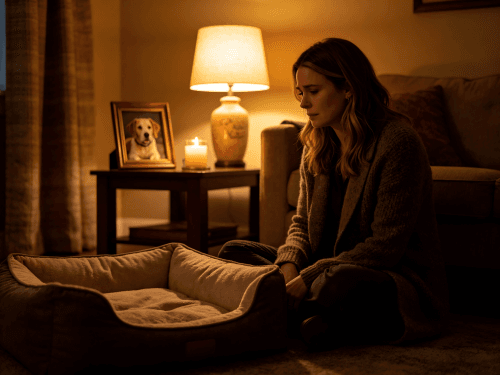
The house feels different.
Not dramatically different. Not at first.
But as evening arrives and the distractions of the day begin to fade, something becomes impossible to ignore.
The silence.
Maybe your dog passed away earlier that day.
Maybe you came home from the veterinary clinic carrying an empty leash.
Maybe your dog died peacefully in her sleep, and you're still struggling to understand how life could feel so different in just a few hours.
Then night comes.
And suddenly, everything feels heavier.
Many grieving pet owners say the first night after losing a dog is one of the hardest parts of the entire grieving process.
You may find yourself unable to sleep.
You may keep listening for familiar sounds.
You may stare at the spot where their bed used to be.
You may even catch yourself expecting to hear paws moving across the floor.
If you're experiencing this tonight, please know that you're not alone.
The first night after losing a dog is difficult for reasons that go far beyond sadness.
It touches routines, attachment, memory, and love in ways many people don't fully understand until they experience it themselves.
During the day, there are distractions.
Phone calls.
Work.
Family responsibilities.
Errands.
Even grief itself can sometimes hide behind activity.
But nighttime removes many of those distractions.
The mind becomes quieter.
And when the mind becomes quieter, grief often becomes louder.
For many dog owners, evenings revolve around familiar rituals.
The last walk.
The evening meal.
The bedtime routine.
The final trip outside before sleep.
These routines often happen automatically for years.
Then suddenly they stop.
The absence can feel shocking.
You may find yourself reaching for the leash without thinking.
Looking toward their bed.
Waiting for a sound that never comes.
These moments are completely normal.
In fact, many people continue these unconscious habits for weeks after loss.
During daylight hours, empty spaces can be easy to overlook.
At night, they become impossible to miss.
The empty dog bed.
The corner of the couch.
The spot beside your own bed.
The silence can feel almost physical.
If you've noticed that grief seems stronger once the house becomes quiet, you may also relate to:
Why Pet Memories Feel Stronger at Night
One of the most heartbreaking thoughts many pet owners experience after loss has little to do with themselves.
Instead, it centers on their pet.
You may find yourself wondering:
"Are they alone?"
"Are they scared?"
"Did I make the right decision?"
This is especially common when cremation or burial arrangements are involved.
Many people feel guilty after leaving their pet at a veterinary clinic or crematory.
Even when they know it was necessary.
Even when they know their pet has already passed.
The emotional part of the brain struggles with separation.
The thought of leaving them behind can feel unbearable.
You may find yourself imagining them alone.
Cold.
Waiting for you.
These thoughts can be deeply distressing.
But they are also incredibly common.
These worries usually don't reflect reality.
They reflect attachment.
Your mind is trying to continue caring for someone you loved deeply.
The same instinct that made you protect them during life continues after loss.
And because love doesn't disappear overnight, your brain keeps looking for ways to care for them.
For many people, the first night is when guilt arrives.
The house becomes quiet.
The events replay in your mind.
And the questions begin.
Almost every grieving pet owner asks this question at some point.
Even people who provided years of loving care.
Even people who did everything possible medically.
Grief often creates the illusion that there must have been something more you could have done.
But love and hindsight are a painful combination.
When we know the outcome, we naturally begin searching for things we wish we had known earlier.
This may be one of the most common questions after losing a dog.
The answer, for most dogs, is beautifully simple.
Yes.
Dogs experience love through everyday moments.
The walks.
The treats.
The cuddles.
The routines.
The safety.
The presence.
Your dog did not measure your love by your final day together.
They experienced it through every day that came before.
Related reading:
Do Pets Know They Are Loved? What Science and Everyday Moments Tell Us
If your dog died in her sleep, you may be carrying a unique combination of emotions.
Shock.
Confusion.
Relief that they did not suffer.
Sadness that you didn't get a final goodbye.
These emotions can exist together.
None of them are wrong.
People often hesitate to admit this.
But sometimes one pet feels different.
Not better.
Not more deserving.
Just different.
A deeper connection.
A stronger bond.
A relationship that seems woven into your identity.
Many people call this a "soul dog."
Losing a soul dog can feel especially devastating because you're grieving more than a pet.
You're grieving a companion who walked through an important chapter of your life with you.
If this is how your loss feels, it does not mean you loved your other pets less.
Relationships are unique.
Just as human relationships differ, so do relationships with animals.
There is no perfect way to navigate grief.
But there are gentle practices that many people find comforting.
Tell your dog everything you wish you could say.
Share memories.
Express gratitude.
Talk about what you miss.
Many people find that writing creates a sense of connection when words feel trapped inside.
Some people find comfort in photographs immediately.
Others need time.
Both responses are normal.
If you're not ready yet, that's okay.
If you are, allow yourself to revisit happy memories without pressure.
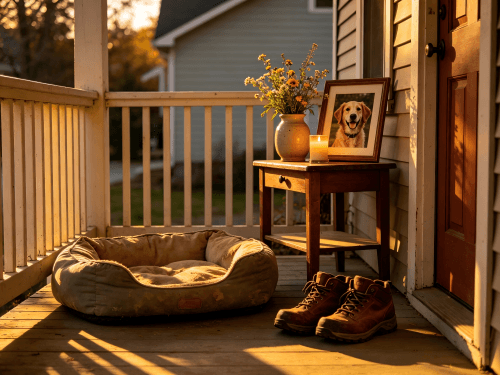
A framed photo.
A collar.
A favorite toy.
A candle.
A paw print.
A memorial space can provide comfort during the early days of grief.
Some people keep a tag in their pocket.
Others create a memory box.
Some wear memorial jewelry or keep a paw print keepsake nearby.
These objects don't remove grief.
But they can provide a sense of connection when the absence feels overwhelming.
For additional remembrance ideas, see:
Pet Remembrance After Loss: How We Keep Love and Memory Alive
Right now, healing may feel impossible.
Many grieving pet owners cannot imagine ever feeling normal again.
But grief changes.
Not overnight.
Not quickly.
But gradually.
One day, you may think of a memory and smile before you cry.
One day, you may sleep through the night.
One day, the love may feel stronger than the pain.
Healing doesn't mean forgetting.
It means learning to carry the relationship differently.
If you're wondering what that process often looks like, you may find comfort in:
Understanding Pet Loss Grief: Why It Hurts and How Healing Works
and
Why Pet Grief Feels Lonely Even Around Other People
If tonight is your first night without your dog, please be gentle with yourself.
You may not sleep well.
You may cry unexpectedly.
You may replay memories over and over.
You may wonder whether you did enough.
You may worry about whether they knew how much they were loved.
These thoughts are not signs of failure.
They are signs of attachment.
Signs of love.
The depth of your grief reflects the depth of the bond you shared.
And while the nights ahead may still feel difficult, they will not always feel exactly as they do right now.
Over time, the sharpness of grief often softens.
The love remains.
The memories remain.
And slowly, those memories begin to bring comfort alongside sadness.
Your dog may no longer be beside your bed tonight.
But the years of companionship, trust, loyalty, and love you shared remain part of you.
And they always will.
July 15, 2026
Was your pet your soulmate? Discover why some dogs and cats become our deepest emotional companions, why losing a soulmate pet hurts so much, and gentle ways to honor their memory.

July 11, 2026
"I want people to know my dog existed." If you've lost a beloved dog and fear they'll be forgotten, you're not alone. Learn why sharing memories is a natural part of grief and meaningful ways to honor your dog's life.

July 10, 2026
If your cat seemed fine yesterday but passed away today, you're not alone. Learn why some illnesses progress silently, why guilt is so common, and gentle ways to begin healing after sudden pet loss.