Free US Shipping on orders $100+
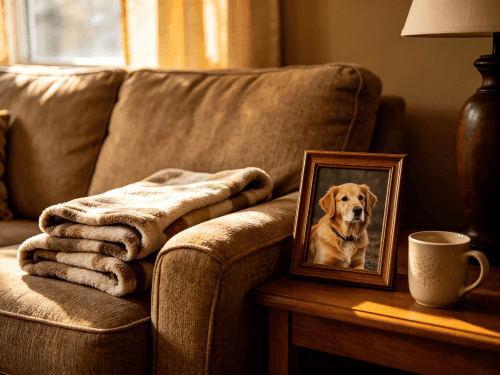
A few days after losing a beloved dog, someone says it.
Maybe it's a friend trying to help.
Maybe it's a family member.
Maybe it's a coworker who feels uncomfortable seeing you sad.
They tilt their head sympathetically and offer what they believe is a practical solution:
"Why don't you just get another dog?"
For a moment, you may not know how to respond.
Part of you understands they probably mean well.
But another part of you feels unexpectedly hurt.
You might think:
"They don't understand."
"My dog isn't replaceable."
"I don't want another dog. I want my dog."
If you've experienced this reaction, you're far from alone.
Many grieving pet owners hear similar comments after a loss. While the intention is often kindness, the suggestion can feel deeply painful because it misunderstands what grief actually is.
Losing a pet is not the loss of an object that can be replaced. It's the loss of a relationship. And relationships don't work that way.
When people say, "Just get another dog," they're usually focusing on the fact that dogs bring comfort, companionship, and joy.
What they're often missing is that grief isn't about the absence of a category.
It's about the absence of a specific individual.
You aren't grieving "a dog."
You're grieving your dog.
The one who waited by the door every evening.
The one who knew your routines.
The one who sat beside you through difficult days.
The one whose personality was completely unique.
No new dog, no matter how wonderful, could ever be that exact companion.
That's why the suggestion can feel dismissive, even when it's well-intentioned.
It unintentionally reduces a deeply personal bond to something interchangeable.
And for someone in the middle of grief, that can be incredibly painful.
One reason pet loss can be difficult for some people to understand is that they view pets primarily as animals.
Pet owners often experience something much deeper.
Pets become woven into everyday life.
They share our homes.
They witness our routines.
They accompany us through major life events.
They offer comfort during heartbreak, stress, illness, and loneliness.
Over time, they stop feeling like something we own.
They become someone we love.
Imagine telling someone who lost a close friend:
"Just go make another friend."
The statement misses the point.
The pain isn't about lacking companionship in general.
The pain is about missing one specific relationship.
The same principle applies after pet loss.
Although the comment can hurt, it can be helpful to understand where it often comes from.
Most people aren't trying to minimize your grief.
They're trying to solve it.
Many people feel uncomfortable around sadness.
When they see someone hurting, they instinctively search for a solution.
A problem to fix.
A shortcut to healing.
Getting another dog seems like an easy answer.
After all, dogs bring happiness.
Dogs provide companionship.
Dogs help people smile again.
From the outside, it may seem logical.
The problem is that grief isn't a problem to be solved.
It's an experience that must be lived through.
People who haven't experienced profound pet loss may not realize that replacing companionship isn't the same thing as processing grief.
Their misunderstanding is often rooted in lack of experience rather than lack of compassion.
One of the biggest misconceptions surrounding pet loss is the idea that getting another pet means replacing the one who died.
But healthy pet owners rarely see it that way.
A future pet can become deeply loved.
They can bring joy.
They can create new memories.
What they cannot do is replace a relationship that already existed.
Every pet has their own personality, habits, quirks, and place in our hearts.
If you've ever had multiple pets throughout your life, you probably already know this.
You didn't love one more because another existed.
You loved them differently.
A new dog isn't a replacement.
A new dog is a new relationship.
Understanding this distinction can help remove some of the guilt and pressure that often surround discussions about future adoption.
After a loss, people often ask:
"When are you getting another dog?"
As if there should be a timeline.
A schedule.
A deadline.
The truth is that there isn't one.
Some people adopt again within weeks.
Others wait months.
Some wait years.
Some never adopt again.
All of these choices are valid.
There is no universally correct timeline for welcoming another pet into your life.
The right time is deeply personal.
It depends on your emotional readiness, your circumstances, and your own healing process.
If you're not ready right now, that's okay.
If you don't even want to think about another pet, that's okay too.
Grief doesn't operate according to anyone else's calendar.
For a deeper discussion about this decision, you may find it helpful to read:
Should You Get Another Pet After Loss?
One of the hardest parts of pet grief is not just the loss itself.
It's feeling like nobody understands.
Some people change the subject when you bring up your pet.
Others avoid discussing the loss altogether.
Some offer quick fixes.
Others unintentionally compare your grief to experiences that feel completely different.
Over time, this can create a sense of isolation.
You begin questioning whether your feelings are normal.
You wonder if you're grieving "too much."
You may even stop talking about your pet because explaining your emotions feels exhausting.
This experience is incredibly common among grieving pet owners.
If you've felt alone in your grief, you're not imagining it.
Many people struggle with feeling misunderstood after losing a beloved companion.
You may relate to:
Why Pet Grief Can Feel Lonely Even Around Other People
and
Understanding Pet Loss Grief: Why It Hurts and How Healing Works
If replacing your pet isn't the answer, what does genuine support look like?
Usually, it's much simpler than people realize.
Support often looks like listening.
It looks like allowing someone to tell stories.
It looks like remembering a pet's name.
It looks like acknowledging that the loss matters.
Sometimes the most comforting response isn't advice at all.
It's simply:
"I'm sorry."
"Tell me about them."
"I know how much they meant to you."
These responses create space for grief instead of trying to eliminate it.
And for many grieving pet owners, that space is exactly what they need.
Part of what makes comments like "just get another dog" feel so disconnected is that they overlook how deeply pets become part of daily life.
Grief isn't only about the day they died.
It's about the thousands of moments that came before.
The morning greetings.
The evening walks.
The sound of paws across the floor.
The familiar routines that quietly disappear after loss.
Long after other people have moved on, you may still notice those absences.
You may still look toward their favorite spot.
You may still reach for habits that no longer exist.
Those experiences are not signs that you're stuck.
They're signs that your pet mattered.
You may find comfort in:
The Tiny Habits That Stay After Losing a Pet
One misconception about grief is that healing means no longer feeling sadness.
But healing rarely works that way.
Many people continue missing their pets for years.
The grief changes.
The sharp edges soften.
The memories become easier to revisit.
But the love remains.
Missing your pet doesn't mean you're failing to heal.
It doesn't mean you're refusing to move forward.
It means the relationship was meaningful.
The goal isn't to erase love.
The goal is to carry it differently.
When someone says, "Just get another dog," they're often trying to help.
But grief isn't something that can be solved with a replacement.
Your pet was unique.
The bond you shared was unique.
And the pain you feel reflects the importance of that relationship.
If you're not ready for another pet, that's okay.
If you eventually decide to welcome another companion into your life, that's okay too.
Neither choice diminishes the love you had for the pet you lost.
Because they were never interchangeable.
They were never replaceable.
And missing them deeply isn't a sign that you're stuck in grief.
It's a sign that they mattered.
And some relationships leave footprints that remain long after the paws themselves are gone.
A few days after losing a beloved dog, someone says it.
Maybe it's a friend trying to help.
Maybe it's a family member.
Maybe it's a coworker who feels uncomfortable seeing you sad.
They tilt their head sympathetically and offer what they believe is a practical solution:
"Why don't you just get another dog?"
For a moment, you may not know how to respond.
Part of you understands they probably mean well.
But another part of you feels unexpectedly hurt.
You might think:
"They don't understand."
"My dog isn't replaceable."
"I don't want another dog. I want my dog."
If you've experienced this reaction, you're far from alone.
Many grieving pet owners hear similar comments after a loss. While the intention is often kindness, the suggestion can feel deeply painful because it misunderstands what grief actually is.
Losing a pet is not the loss of an object that can be replaced. It's the loss of a relationship. And relationships don't work that way.
When people say, "Just get another dog," they're usually focusing on the fact that dogs bring comfort, companionship, and joy.
What they're often missing is that grief isn't about the absence of a category.
It's about the absence of a specific individual.
You aren't grieving "a dog."
You're grieving your dog.
The one who waited by the door every evening.
The one who knew your routines.
The one who sat beside you through difficult days.
The one whose personality was completely unique.
No new dog, no matter how wonderful, could ever be that exact companion.
That's why the suggestion can feel dismissive, even when it's well-intentioned.
It unintentionally reduces a deeply personal bond to something interchangeable.
And for someone in the middle of grief, that can be incredibly painful.
One reason pet loss can be difficult for some people to understand is that they view pets primarily as animals.
Pet owners often experience something much deeper.
Pets become woven into everyday life.
They share our homes.
They witness our routines.
They accompany us through major life events.
They offer comfort during heartbreak, stress, illness, and loneliness.
Over time, they stop feeling like something we own.
They become someone we love.
Imagine telling someone who lost a close friend:
"Just go make another friend."
The statement misses the point.
The pain isn't about lacking companionship in general.
The pain is about missing one specific relationship.
The same principle applies after pet loss.
Although the comment can hurt, it can be helpful to understand where it often comes from.
Most people aren't trying to minimize your grief.
They're trying to solve it.
Many people feel uncomfortable around sadness.
When they see someone hurting, they instinctively search for a solution.
A problem to fix.
A shortcut to healing.
Getting another dog seems like an easy answer.
After all, dogs bring happiness.
Dogs provide companionship.
Dogs help people smile again.
From the outside, it may seem logical.
The problem is that grief isn't a problem to be solved.
It's an experience that must be lived through.
People who haven't experienced profound pet loss may not realize that replacing companionship isn't the same thing as processing grief.
Their misunderstanding is often rooted in lack of experience rather than lack of compassion.
One of the biggest misconceptions surrounding pet loss is the idea that getting another pet means replacing the one who died.
But healthy pet owners rarely see it that way.
A future pet can become deeply loved.
They can bring joy.
They can create new memories.
What they cannot do is replace a relationship that already existed.
Every pet has their own personality, habits, quirks, and place in our hearts.
If you've ever had multiple pets throughout your life, you probably already know this.
You didn't love one more because another existed.
You loved them differently.
A new dog isn't a replacement.
A new dog is a new relationship.
Understanding this distinction can help remove some of the guilt and pressure that often surround discussions about future adoption.
After a loss, people often ask:
"When are you getting another dog?"
As if there should be a timeline.
A schedule.
A deadline.
The truth is that there isn't one.
Some people adopt again within weeks.
Others wait months.
Some wait years.
Some never adopt again.
All of these choices are valid.
There is no universally correct timeline for welcoming another pet into your life.
The right time is deeply personal.
It depends on your emotional readiness, your circumstances, and your own healing process.
If you're not ready right now, that's okay.
If you don't even want to think about another pet, that's okay too.
Grief doesn't operate according to anyone else's calendar.
For a deeper discussion about this decision, you may find it helpful to read:
Should You Get Another Pet After Loss?
One of the hardest parts of pet grief is not just the loss itself.
It's feeling like nobody understands.
Some people change the subject when you bring up your pet.
Others avoid discussing the loss altogether.
Some offer quick fixes.
Others unintentionally compare your grief to experiences that feel completely different.
Over time, this can create a sense of isolation.
You begin questioning whether your feelings are normal.
You wonder if you're grieving "too much."
You may even stop talking about your pet because explaining your emotions feels exhausting.
This experience is incredibly common among grieving pet owners.
If you've felt alone in your grief, you're not imagining it.
Many people struggle with feeling misunderstood after losing a beloved companion.
You may relate to:
Why Pet Grief Can Feel Lonely Even Around Other People
and
Understanding Pet Loss Grief: Why It Hurts and How Healing Works
If replacing your pet isn't the answer, what does genuine support look like?
Usually, it's much simpler than people realize.
Support often looks like listening.
It looks like allowing someone to tell stories.
It looks like remembering a pet's name.
It looks like acknowledging that the loss matters.
Sometimes the most comforting response isn't advice at all.
It's simply:
"I'm sorry."
"Tell me about them."
"I know how much they meant to you."
These responses create space for grief instead of trying to eliminate it.
And for many grieving pet owners, that space is exactly what they need.
Part of what makes comments like "just get another dog" feel so disconnected is that they overlook how deeply pets become part of daily life.
Grief isn't only about the day they died.
It's about the thousands of moments that came before.
The morning greetings.
The evening walks.
The sound of paws across the floor.
The familiar routines that quietly disappear after loss.
Long after other people have moved on, you may still notice those absences.
You may still look toward their favorite spot.
You may still reach for habits that no longer exist.
Those experiences are not signs that you're stuck.
They're signs that your pet mattered.
You may find comfort in:
The Tiny Habits That Stay After Losing a Pet
One misconception about grief is that healing means no longer feeling sadness.
But healing rarely works that way.
Many people continue missing their pets for years.
The grief changes.
The sharp edges soften.
The memories become easier to revisit.
But the love remains.
Missing your pet doesn't mean you're failing to heal.
It doesn't mean you're refusing to move forward.
It means the relationship was meaningful.
The goal isn't to erase love.
The goal is to carry it differently.
When someone says, "Just get another dog," they're often trying to help.
But grief isn't something that can be solved with a replacement.
Your pet was unique.
The bond you shared was unique.
And the pain you feel reflects the importance of that relationship.
If you're not ready for another pet, that's okay.
If you eventually decide to welcome another companion into your life, that's okay too.
Neither choice diminishes the love you had for the pet you lost.
Because they were never interchangeable.
They were never replaceable.
And missing them deeply isn't a sign that you're stuck in grief.
It's a sign that they mattered.
And some relationships leave footprints that remain long after the paws themselves are gone.

July 20, 2026
Losing a dog to parvo is heartbreaking, especially if they were vaccinated. Learn why guilt is so common after parvovirus, how to cope with pet loss, and gentle ways to honor your dog's memory.
July 15, 2026
Was your pet your soulmate? Discover why some dogs and cats become our deepest emotional companions, why losing a soulmate pet hurts so much, and gentle ways to honor their memory.

July 11, 2026
"I want people to know my dog existed." If you've lost a beloved dog and fear they'll be forgotten, you're not alone. Learn why sharing memories is a natural part of grief and meaningful ways to honor your dog's life.