Free US Shipping on orders $100+
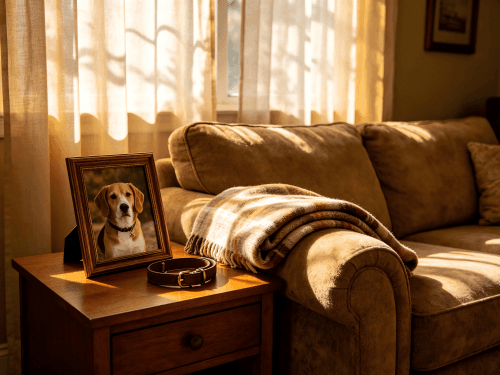
Most people think grief arrives in the big moments.
The day your pet dies.
The trip home from the veterinarian.
The first birthday without them.
The anniversary of their passing.
Those moments are undeniably painful. But for many pet owners, grief doesn't stay confined to those major milestones.
Instead, it quietly follows us into ordinary life.
It appears when you reach for the leash before remembering there is no walk today.
When you glance toward their favorite sleeping spot.
When you hear a sound in another room and briefly think it's them.
These tiny habits can catch us off guard. Sometimes they hurt more than expected because they remind us just how deeply our pets were woven into everyday life.
If you've ever wondered, "Why do I still look for my pet?" or "Why do I keep expecting my dog to be there?", you're experiencing something many grieving pet owners understand all too well.
The love we shared with our pets wasn't built only through extraordinary moments. It was built through thousands of ordinary ones.
And that's why grief often lives there too.
One of the strangest parts of pet loss is how automatically we continue searching for them.
You may walk into a room and glance toward their bed.
You may open the front door and instinctively look down.
You may hear a floorboard creak and think for a split second that they're nearby.
These reactions happen so quickly that you don't even realize you're doing them.
Many pet owners describe checking:
For a brief moment, your brain expects them to be there.
Then reality catches up.
And sometimes that tiny realization hurts all over again.
If this sounds familiar, you may also relate to The Unexpected Places We Still Look for Our Pets.
Some habits aren't visual.
They're auditory.
You might still listen for:
Many grieving pet owners report hearing these familiar sounds in their minds long after their pet has passed away.
Not because they're imagining things.
But because those sounds became part of daily life.
For years, your brain learned to associate those noises with comfort, companionship, and routine.
Their absence can feel surprisingly loud.
Sometimes the silence itself becomes a reminder.
Pets occupy physical spaces in our homes.
But they also occupy emotional spaces.
Perhaps there is a corner of the couch that still feels like theirs.
Maybe you continue leaving room on the bed.
Maybe you hesitate before moving their favorite blanket.
The empty spaces can become powerful reminders because they highlight what used to be there.
You don't just notice the couch.
You notice the absence.
You don't just see the floor.
You remember where they used to stretch out for afternoon naps.
The home itself becomes filled with memories.
Not because you're trying to think about them.
Because they were part of nearly every room.
One of the hardest adjustments after losing a pet is losing the routines attached to them.
For years, your day may have followed a familiar rhythm.
Morning walks.
Breakfast time.
Medication schedules.
Play sessions.
Evening cuddles.
Bedtime rituals.
Then suddenly those routines disappear.
And the empty spaces they leave behind can feel surprisingly painful.
Many grieving pet owners say the hardest moments aren't dramatic.
They're ordinary.
It's 6 p.m., and there's no dinner to prepare.
It's bedtime, and no one follows you upstairs.
It's Saturday morning, and there's no walk to take.
These routine gaps remind us that grief isn't only about missing someone.
It's also about learning how to live without the patterns we shared.
You may find comfort in reading Why Do I Still Reach for My Pet?, which explores how these automatic habits often continue after loss.
Sometimes people worry these habits mean they're not healing.
In reality, they're often a natural consequence of how human brains work.
Our brains are built around patterns.
When something happens repeatedly for years, it becomes automatic.
You don't consciously decide to look toward the door.
You simply do.
The same way you automatically know where light switches are in your house.
The same way you can drive a familiar route without thinking.
Your pet wasn't just a part of your life emotionally.
They became part of your brain's daily map of the world.
After loss, it takes time for those patterns to change.
And even when they do, certain habits may linger.
Not because you're stuck.
Because your relationship mattered.
Many people expect grief to appear during major anniversaries.
But often it's the ordinary moments that hurt the most.
Coming home from work.
Making breakfast.
Watching television.
Folding laundry.
Walking through the front door.
For years, your pet participated in these moments with you.
They weren't extraordinary events.
That's precisely why their absence feels so noticeable.
Love is often built through repetition.
Thousands of small interactions.
Thousands of shared routines.
Thousands of ordinary days.
When those ordinary days change, grief naturally appears there too.
This experience is closely related to what many readers describe in The Little Things We Miss Most After Losing a Pet.
When grief lasts longer than expected, people sometimes become concerned.
"Shouldn't I be over this by now?"
"Why am I still looking for them?"
"Why do I keep thinking they're here?"
The truth is that these tiny habits rarely indicate a problem.
More often, they reflect the depth of the bond.
Think about someone who lived in the same house for twenty years.
Even after moving, they might occasionally drive toward the old neighborhood.
Not because they haven't moved on.
Because habits leave traces.
The same thing happens after pet loss.
The fact that you still glance toward their favorite chair doesn't mean you're stuck in grief.
It means they were part of your daily life.
That's not weakness.
That's attachment.
And attachment is another word for love.
Over time, some reminders begin to feel less painful.
Not all at once.
Not every day.
But gradually.
You may find yourself smiling when you notice one of those habits.
You might remember a funny routine.
A favorite sleeping position.
A familiar greeting at the door.
Instead of feeling only sadness, you begin feeling gratitude too.
Many pet owners choose to create small remembrance rituals that help preserve these memories.
Some keep a memory box containing:
Others create photo displays or memorial spaces at home.
Some choose memorial jewelry that allows them to carry a small reminder of their pet wherever they go.
None of these things erase grief.
But they can transform painful reminders into meaningful connections.
For more ideas, explore Pet Remembrance After Loss: How We Keep Love and Memory Alive.
Something beautiful often happens during healing.
The habits don't always disappear completely.
They simply change meaning.
You may still glance toward their spot on the couch.
But instead of feeling shocked by the absence, you remember a happy moment.
You may still think of them at dinner time.
But instead of tears, you smile at a memory.
The habit remains.
The pain softens.
The love stays.
In a way, these tiny habits become tiny memorials.
Small reminders that someone important was here.
Someone who shared your home, your routines, and your heart.
Grief doesn't only live in anniversaries, memorial services, or major life events.
Sometimes it lives in tiny everyday moments.
A glance toward the door.
An empty spot on the couch.
A familiar sound that never comes.
A routine that no longer exists.
These small habits can feel painful because they reveal how deeply your pet was woven into daily life.
But they can also remind you of something meaningful.
They are evidence of a relationship that mattered.
Evidence of years spent together.
Evidence of love that became part of your everyday world.
And while the habits may change over time, the bond behind them remains.
Because some of the strongest connections we have are built not through extraordinary moments, but through the small, ordinary moments we shared every day.
July 15, 2026
Was your pet your soulmate? Discover why some dogs and cats become our deepest emotional companions, why losing a soulmate pet hurts so much, and gentle ways to honor their memory.

July 11, 2026
"I want people to know my dog existed." If you've lost a beloved dog and fear they'll be forgotten, you're not alone. Learn why sharing memories is a natural part of grief and meaningful ways to honor your dog's life.

July 10, 2026
If your cat seemed fine yesterday but passed away today, you're not alone. Learn why some illnesses progress silently, why guilt is so common, and gentle ways to begin healing after sudden pet loss.